DSIP Description
DSIP (Delta Sleep-Inducing Peptide) is a naturally occurring nonapeptide — a chain of nine amino acids with the sequence Trp-Ala-Gly-Gly-Asp-Ala-Ser-Gly-Glu (WAGGDASGE). It was first isolated in 1974 by the Swiss research group of Schoenenberger and Monnier from cerebral venous blood of rabbits during hypnogenic electrical stimulation, then chemically characterized and synthesized in 1977. DSIP is classified as amphiphilic, with both hydrophilic and hydrophobic regions, and contains an N-terminal tryptophan residue used for laboratory UV detection.
DSIP is best known for its ability to enhance delta-wave (slow-wave) EEG activity, the architecture of deep restorative sleep. Beyond its sleep-architecture activity, the research literature characterizes a broader neuropeptide profile: modulation of the HPA axis with reductions in ACTH and cortisol output, influence on GABAergic tone, attenuation of stress-induced responses, and effects on the release of growth hormone and other anterior-pituitary hormones. It is endogenously present in human brain tissue, plasma, and cerebrospinal fluid, and exhibits a circadian concentration pattern.
DSIP has been investigated for more than four decades as a research neuropeptide, with a literature spanning sleep architecture, stress modulation, neuroendocrine signaling, and longevity models. It is studied here strictly as a research peptide.
Peptide Information
| Peptide Sequence | Trp-Ala-Gly-Gly-Asp-Ala-Ser-Gly-Glu (WAGGDASGE, 9 aa) |
| Molecular Formula | C35H48N10O15 |
| Molecular Weight | 848.81 g/mol |
| CAS Number | 62568-57-4 |
| PubChem CID | 68816 |
| Synonyms | Delta Sleep-Inducing Peptide, Emideltide, DSIP nonapeptide |
| Supplied As | Acetate salt |
Lyophilized Peptides:
These peptides are freeze-dried, a process that not only extends shelf life but also preserves the purity and integrity of the peptides during storage. We do not use any fillers in this process. DSIP should be stored refrigerated and protected from light; keep reconstituted solution refrigerated.
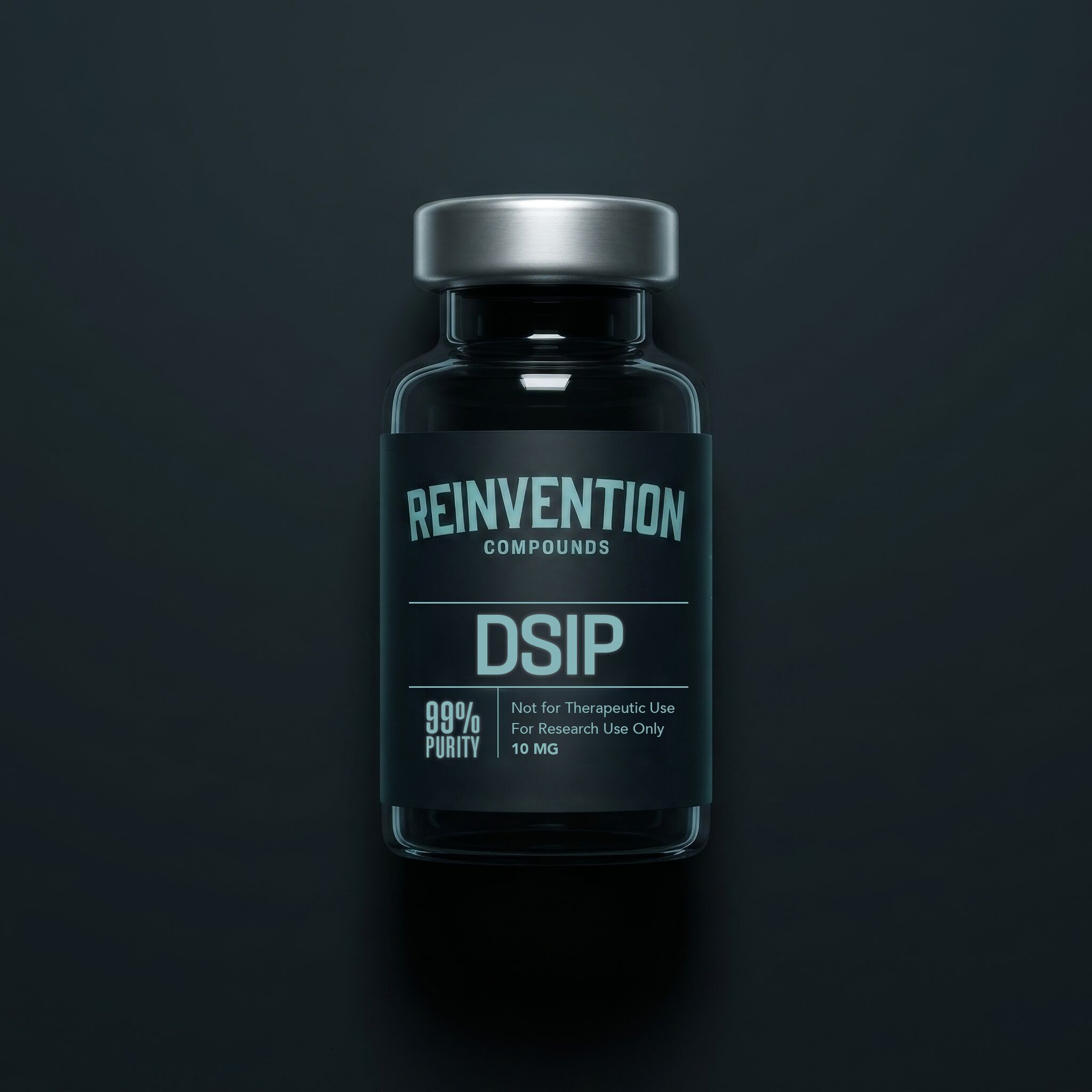
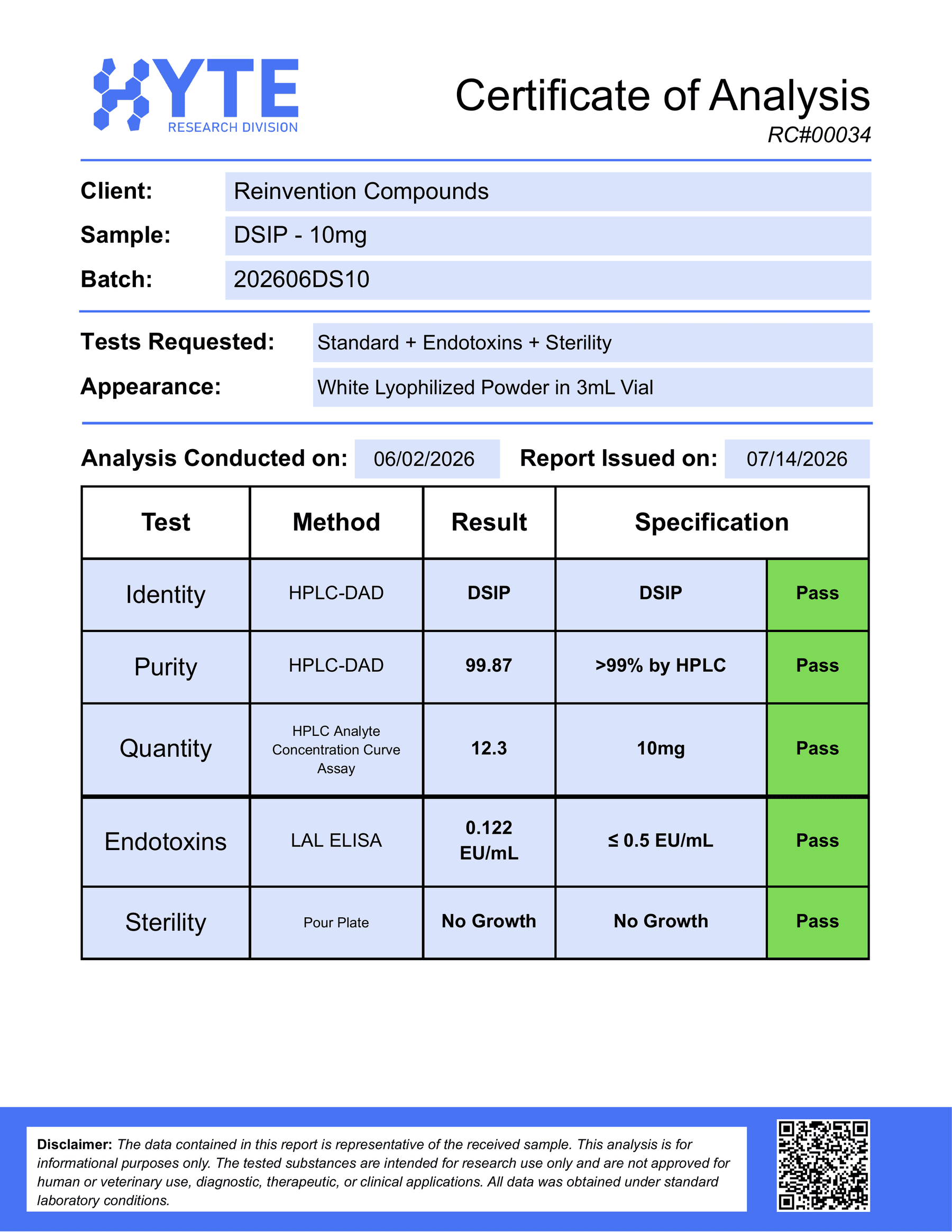
Sealed Vial: 10mg of Lyophilized Powder in 3ml Vial
CAS No.: 62568-57-4
Other Names: Delta Sleep-Inducing Peptide, Emideltide, DSIP nonapeptide
This Product is Not For Human Consumption and is for Laboratory Use Only. Please Read our Terms and Conditions.
Disclaimer: For Research Purposes Only
This content is provided strictly for research purposes and does not constitute an endorsement or recommendation for the non-laboratory application or improper handling of peptides designed for research. The information, including discussions about specific peptides and their researched benefits, is presented for informational purposes only and must not be construed as health, clinical, or legal guidance, nor an encouragement for non-research use. Peptides described here are solely for use in structured scientific study by authorized individuals. We advise consulting with research experts, medical practitioners, or legal counsel prior to any decisions about obtaining or utilizing these peptides. The expectation of responsible, ethical utilization of this information for legitimate investigative and scholarly objectives is paramount. This notice is dynamic and governs all provided content on research peptides.
DSIP Research
The following sections explore the diverse applications and mechanisms of DSIP across multiple research domains. As one of the earliest characterized sleep-related neuropeptides, it has a research literature dating back more than four decades, with renewed interest in its neuroendocrine and stress-modulating effects.
This overview synthesizes key findings on its sleep-architecture mechanism and experimental applications in stress modulation, neuroendocrine signaling, and longevity models.
Sleep-Architecture Mechanism
DSIP’s defining property is enhancement of delta-band (1–4 Hz) EEG activity. The pivotal early human study evaluated synthetic DSIP in middle-aged chronic insomniacs and reported longer sleep duration and higher sleep quality with fewer interruptions, without daytime sedation — supporting a “normalizing” rather than sedating influence on human sleep regulation1.
Comprehensive Neuropeptide Review
A comprehensive review of the DSIP literature characterizes its sleep-promoting properties alongside its broader profile — including modulation of opioid signaling, antioxidant activity, attenuation of stress responses, and influence on the release of anterior-pituitary hormones — documenting its classification as a multifunctional neuropeptide whose receptor remains unidentified2.
Stress and Neuroendocrine Signaling Research
A modern review of the DSIP literature synthesizes its stress-modulating, antioxidant, and neuroendocrine properties, and explicitly frames the peptide as an “unresolved riddle” — a naturally occurring nonapeptide with broad reported effects but no identified receptor or precursor gene. The review documents reductions in ACTH and cortisol output and attenuation of stress-induced behaviors across multiple animal models, anchoring the modern understanding of its non-sleep activities3.
Longevity Research
DSIP has been studied in geroprotection models. A long-term study in female SHR mice using a DSIP-containing preparation reported reduced spontaneous tumor incidence, improvements in biomarkers of aging, and an increase in maximum lifespan compared with
