
Click here to Download our free peptide guide

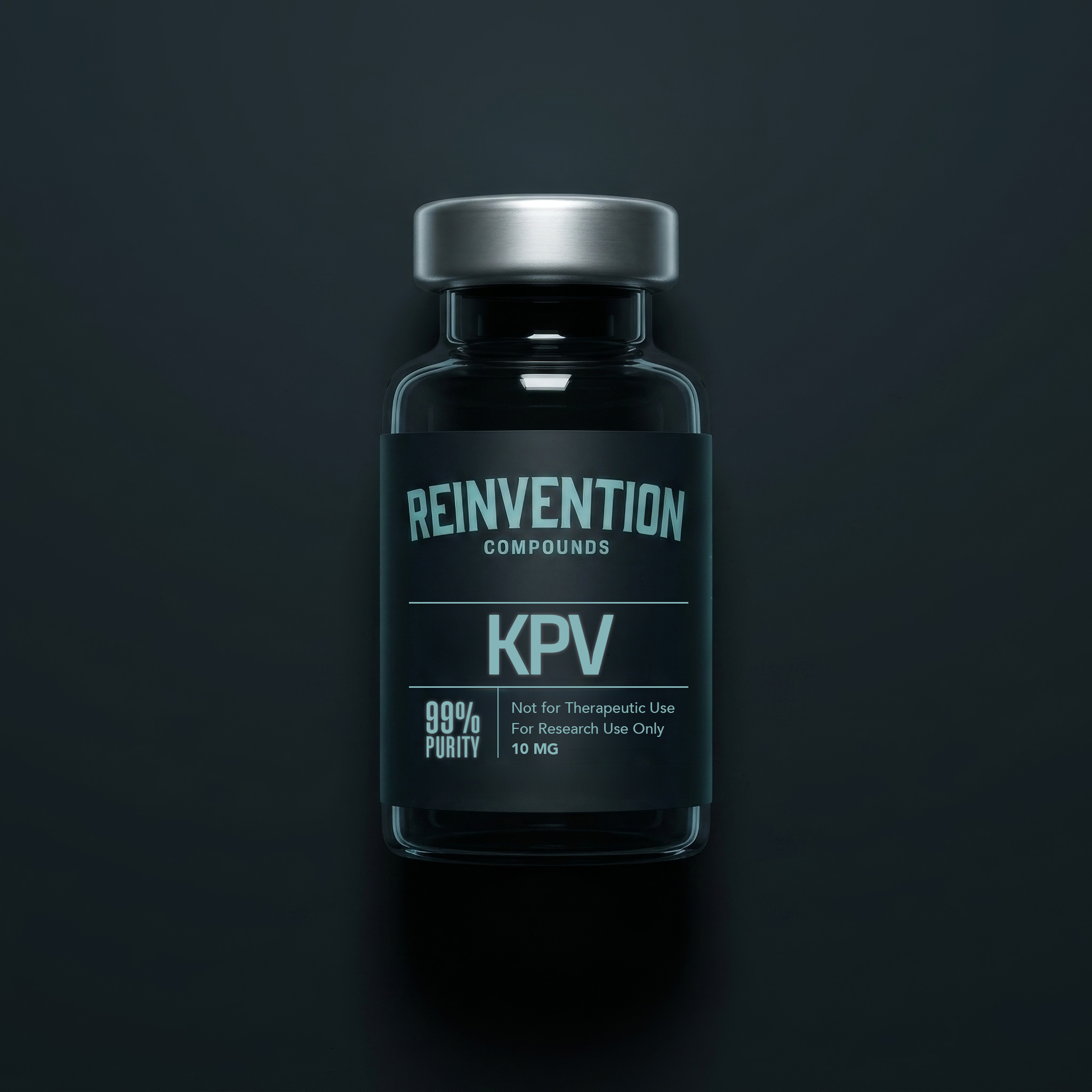
KPV – 10mg

Please note, all orders are processed Monday – Friday 8:00 a.m. – 4:00 p.m. est. Any orders received after 4:00 p.m. est will be processed during the next business day.

Loading...

KPV – 10mg

$54.99

KPV Description

KPV is a synthetic tripeptide composed of lysine, proline, and valine (Lys-Pro-Val), corresponding to the C-terminal tripeptide fragment (residues 11–13) of alpha-melanocyte-stimulating hormone (α-MSH). The anti-inflammatory activity of this minimal fragment was first identified by Hiltz and Lipton in 1989.

Unlike full-length α-MSH, KPV does not engage classical melanocortin receptors and therefore does not stimulate melanogenesis. Its anti-inflammatory activity is mediated through inhibition of NF-κB and MAP-kinase signaling, with reduction of pro-inflammatory cytokine output (TNF-α, IL-1β, IL-6). In intestinal models KPV is taken up by the PepT1 co-transporter, which is upregulated in inflamed colonic epithelium — providing a direct route to inflamed tissue.

KPV has been extensively studied as a melanocortin-derived anti-inflammatory tripeptide across two decades of research, with a literature spanning intestinal inflammation, contact hypersensitivity, and epithelial cytokine signaling. This product is being sold for its use in research only.

7 in stock

SKU: KPV10 Category: Tag:

You may also like

GHK-Cu - 50mg

$29.99

Research Bacteriostatic Water - 30ml

$24.99

TB-500 – 5mg

$49.99

BPC-157 – 10mg

$69.99

KPV Description

KPV is a synthetic tripeptide composed of three amino acids — lysine, proline, and valine (Lys-Pro-Val) — corresponding to the C-terminal tripeptide fragment (residues 11–13) of alpha-melanocyte-stimulating hormone (α-MSH), a 13-amino-acid neuropeptide derived from proopiomelanocortin. The anti-inflammatory activity of this minimal C-terminal fragment was first identified by Hiltz and Lipton in 1989, who showed that the isolated tripeptide retained significant anti-inflammatory properties of the full-length hormone.

Unlike full-length α-MSH, KPV does not engage classical melanocortin receptors and therefore does not stimulate melanogenesis. Instead, its anti-inflammatory mechanism is mediated through downstream signaling pathways — principally inhibition of nuclear factor-κB (NF-κB) activation and MAP-kinase signaling, with downstream reduction of pro-inflammatory cytokine output (TNF-α, IL-1β, IL-6, IL-8, IFN-γ). In intestinal models KPV is taken up by the H⁺/peptide co-transporter PepT1, which is upregulated in inflamed colonic epithelium — providing a direct route by which the tripeptide reaches inflamed tissue.

KPV has been extensively studied as a melanocortin-derived anti-inflammatory tripeptide across two decades of research, with a literature spanning intestinal inflammation, contact hypersensitivity, and epithelial cytokine signaling. It is studied here strictly as a research peptide.

Peptide Information

Peptide Sequence Lys-Pro-Val-NH2 (Lysine-Proline-Valine, C-terminal amidated; α-MSH residues 11–13)
Molecular Formula C16H30N4O4 (C-terminal amidated form)
Molecular Weight 342.43 g/mol
CAS Number 67727-97-3
PubChem CID 125672
Synonyms Lys-Pro-Val, KPV tripeptide, α-MSH(11-13), Melanocortin C-terminal tripeptide
Supplied As Acetate salt

Lyophilized Peptides:

These peptides are freeze-dried, a process that not only extends shelf life but also preserves the purity and integrity of the peptides during storage. We do not use any fillers in this process. KPV should be stored refrigerated and protected from light; keep reconstituted solution refrigerated.

Sealed Vial: 10mg of Lyophilized Powder in 3ml Vial

CAS No.: 67727-97-3

Other Names: Lys-Pro-Val, KPV tripeptide, α-MSH(11-13)

This Product is Not For Human Consumption and is for Laboratory Use Only. Please Read our Terms and Conditions.

Disclaimer: For Research Purposes Only
This content is provided strictly for research purposes and does not constitute an endorsement or recommendation for the non-laboratory application or improper handling of peptides designed for research. The information, including discussions about specific peptides and their researched benefits, is presented for informational purposes only and must not be construed as health, clinical, or legal guidance, nor an encouragement for non-research use. Peptides described here are solely for use in structured scientific study by authorized individuals. We advise consulting with research experts, medical practitioners, or legal counsel prior to any decisions about obtaining or utilizing these peptides. The expectation of responsible, ethical utilization of this information for legitimate investigative and scholarly objectives is paramount. This notice is dynamic and governs all provided content on research peptides.

KPV Research

The following sections explore the diverse applications and mechanisms of KPV across multiple research domains. As the C-terminal tripeptide of α-MSH, it has served for over thirty years as a foundational tool compound for studying the anti-inflammatory arm of the melanocortin system independent of pigmentary signaling.

This overview synthesizes key findings on its anti-inflammatory mechanism and experimental applications in intestinal inflammation, NF-κB signaling, and epithelial transport.

Anti-Inflammatory Mechanism

KPV’s discovery as an anti-inflammatory fragment is the foundation of its research record. The seminal study showed that the C-terminal tripeptide of α-MSH retained significant anti-inflammatory activity in vitro despite lacking classical melanocortin receptor binding — establishing KPV as a minimal anti-inflammatory pharmacophore1.

Comprehensive α-MSH Tripeptide Review

A comprehensive review of the α-MSH tripeptide literature characterizes the biochemistry and anti-inflammatory effects of KPV and related fragments across in vitro and in vivo models — documenting consistent suppression of NF-κB activation, downregulation of adhesion molecules and pro-inflammatory cytokines, and a protective profile validated across models of contact dermatitis, ocular and gastrointestinal inflammation, brain inflammation, and arthritis2.

Intestinal Inflammation Research

Among the most extensively studied applications is intestinal inflammation. Research in murine inflammatory-bowel-disease models reported that the melanocortin-derived tripeptide KPV reduced colitis severity and pro-inflammatory signaling, establishing it as a credible candidate for further investigation in epithelial inflammation3.

PepT1-Mediated Epithelial Transport

A defining mechanistic finding in the gut literature is the identification of an active uptake route. Research demonstrated that KPV is taken up into intestinal epithelial and immune cells via the H⁺/peptide co-transporter PepT1 — whose expression is upregulated in inflamed colonic mucosa — with subsequent intracellular inhibition of NF-κB activation. This established a direct mechanism linking the small size of the tripeptide to its targeted activity at sites of intestinal inflammation4.

Research Considerations

In characterized research, KPV is consistently described as well tolerated, with a favorable safety profile in preclinical and limited early clinical investigation, and minimal systemic effects relative to full-length α-MSH. Because activity centers on PepT1-mediated uptake at inflamed epithelial sites, study designs accounting for tissue-specific transporter expression are routinely employed. These considerations are routinely accounted for within controlled study protocols.

References

  1. Hiltz, M. E., & Lipton, J. M. (1989). Antiinflammatory activity of a COOH-terminal fragment of the neuropeptide alpha-MSH. FASEB Journal, 3(11), 2282–2284. https://doi.org/10.1096/fasebj.3.11.2550304
  2. Brzoska, T., Luger, T. A., Maaser, C., Abels, C., & Böhm, M. (2008). α-Melanocyte-stimulating hormone and related tripeptides: biochemistry, antiinflammatory and protective effects in vitro and in vivo, and future perspectives for the treatment of immune-mediated inflammatory diseases. Endocrine Reviews, 29(5), 581–602. https://doi.org/10.1210/er.2007-0027
  3. Kannengiesser, K., Maaser, C., Heidemann, J., Luegering, A., Ross, M., Brzoska, T., et al. (2008). Melanocortin-derived tripeptide KPV has anti-inflammatory potential in murine models of inflammatory bowel disease. Inflammatory Bowel Diseases, 14(3), 324–331. https://doi.org/10.1002/ibd.20334
  4. Dalmasso, G., Charrier-Hisamuddin, L., Thu Nguyen, H. T., Yan, Y., Sitaraman, S., & Merlin, D. (2008). PepT1-mediated tripeptide KPV uptake reduces intestinal inflammation. Gastroenterology, 134(1), 166–178. https://doi.org/10.1053/j.gastro.2007.10.026
{{ reviewsTotal }}{{ options.labels.singularReviewCountLabel }}
{{ reviewsTotal }}{{ options.labels.pluralReviewCountLabel }}
{{ options.labels.newReviewButton }}
{{ userData.canReview.message }}

Related Products

DSIP – 10mg

$49.99

KLOW Blend – 80mg (BPC-157 + TB-500 + GHK-Cu + KPV)

$119.99

Oxytocin Acetate – 5mg

$39.99

Sermorelin – 10mg

$59.99

Join Waitlist We will inform you when the product arrives in stock. Please leave your valid email address below.