
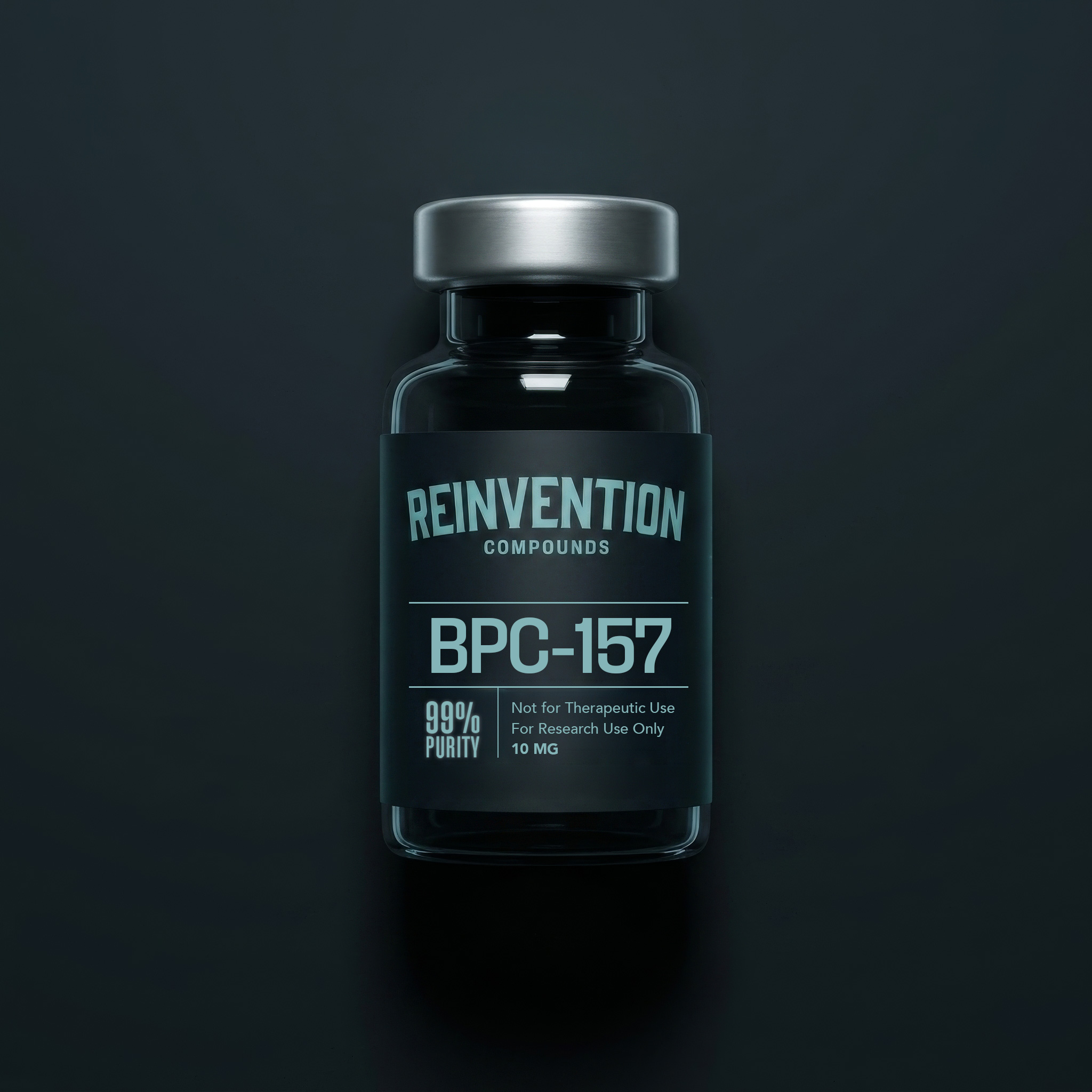
Sermorelin 10mg
Sermorelin is a synthetic 29-amino acid peptide that corresponds to the first 29 amino acids of human growth hormone-releasing hormone (GHRH). Although native GHRH is a 44-amino acid molecule, research established that this 1–29 fragment is the shortest portion that retains full biological activity at the GHRH receptor. It is also known as GHRH (1-29) or GRF (1-29) amide.
Sermorelin works by binding to growth hormone-releasing hormone receptors (GHRH-R) on somatotroph cells in the anterior pituitary, acting as a functional analog of endogenous GHRH. This activates G-protein-coupled signaling, increases intracellular cyclic AMP (cAMP), and stimulates the pituitary to produce and secrete growth hormone (GH) in a pulsatile pattern. Because it acts upstream at the pituitary rather than introducing GH directly, it preserves the body’s natural hypothalamic-pituitary feedback architecture, including somatostatin-mediated regulation.
Downstream, the GH released in response to sermorelin drives hepatic production of insulin-like growth factor-1 (IGF-1), the principal mediator of GH’s anabolic and regenerative effects. Due to this physiologic, feedback-preserving mechanism and its short half-life, sermorelin has been extensively studied as a research tool for investigating pulsatile GH dynamics, pituitary responsiveness, and the somatotropic axis in both preclinical and clinical settings.
Peptide Information
| Property | Value |
|---|---|
| Peptide Sequence | Tyr-Ala-Asp-Ala-Ile-Phe-Thr-Asn-Ser-Tyr-Arg-Lys-Val-Leu-Gly-Gln-Leu-Ser-Ala-Arg-Lys-Leu-Leu-Gln-Asp-Ile-Met-Ser-Arg-NH2 |
| Molecular Formula | C149H246N44O42S |
| Molecular Weight | 3357.9 g/mol |
| CAS Number | 86168-78-7 (acetate: 114466-38-5) |
| PubChem CID | 16132413 |
| Synonyms | GHRH (1-29), GRF (1-29) amide, Sermorelin acetate, Geref |
Lyophilized Peptides:
These peptides are freeze-dried, a process that not only extends shelf life but also preserves the purity and integrity of the peptides during storage. We do not use any fillers in this process.
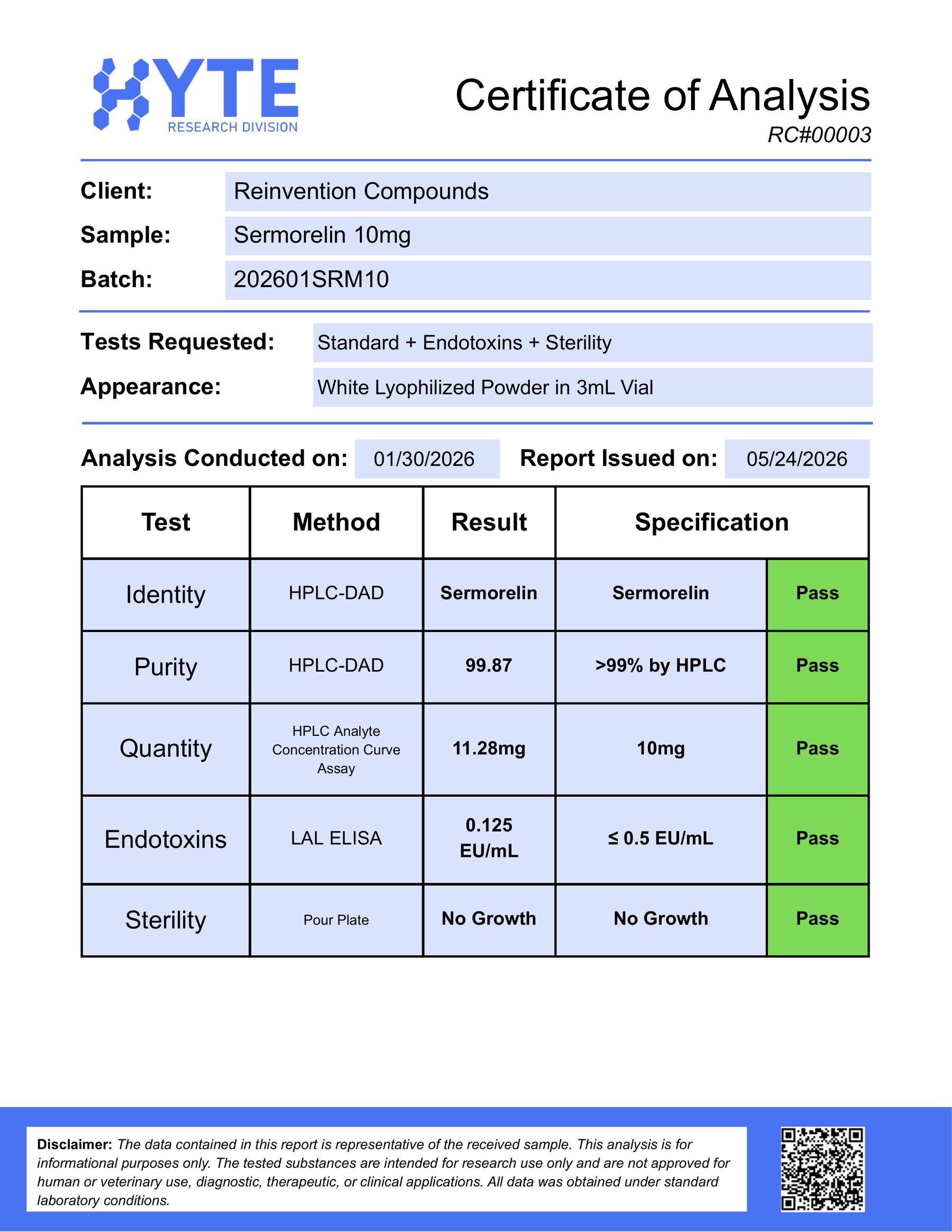
Sealed Vial: 10mg of Lyophilized Powder in 3ml Vial
CAS No.: 86168-78-7
Other Names: GHRH (1-29), Growth Hormone-Releasing Factor (1-29) amide, Sermorelin Acetate
This Product is Not For Human Consumption and is for Laboratory Use Only. Please Read our Terms and Conditions.
Disclaimer: For Research Purposes Only This content is provided strictly for research purposes and does not constitute an endorsement or recommendation for the non-laboratory application or improper handling of peptides designed for research. The information, including discussions about specific peptides and their researched benefits, is presented for informational purposes only and must not be construed as health, clinical, or legal guidance, nor an encouragement for non-research use. Peptides described here are solely for use in structured scientific study by authorized individuals. We advise consulting with research experts, medical practitioners, or legal counsel prior to any decisions about obtaining or utilizing these peptides. The expectation of responsible, ethical utilization of this information for legitimate investigative and scholarly objectives is paramount. This notice is dynamic and governs all provided content on research peptides.
Sermorelin Research
The following sections explore the applications and mechanisms of Sermorelin across multiple research domains. As one of the most extensively studied GHRH analogs, sermorelin has a decades-long research history and a larger body of human clinical data than most other growth hormone secretagogues.
Current scientific investigations have focused on its role as an upstream stimulator of the somatotropic axis, with particular attention to age-related GH decline, body composition, sleep architecture, and metabolic markers. This overview synthesizes key findings on its receptor mechanism and research applications in aging, sleep, and body composition.
GHRH Receptor Mechanism and Pulsatile GH Release
Sermorelin binds to GHRH receptors on pituitary somatotroph cells, where in vitro studies using anterior pituitary cultures have demonstrated a dose-dependent increase in intracellular cAMP signaling that leads to pulsatile GH release. Critically, it does not act directly as a GH receptor agonist — it stimulates the pituitary’s own production and secretion machinery.
In vivo research has shown that subcutaneous administration produces rapid, physiological GH pulses within approximately 15–30 minutes, followed by a downstream rise in circulating IGF-1. Preclinical and clinical data indicate sermorelin can increase peak GH levels several-fold in GH-deficient models. Because the mechanism preserves the hypothalamic-pituitary feedback loop, it has become a key research tool for studying somatotropic axis regulation and pituitary responsiveness rather than receptor bypass.
Research in Aging and the Somatotropic Axis
GH secretion declines substantially with age — a phenomenon termed somatopause — paralleled by changes in body composition, skin, and metabolic function. This has made sermorelin a frequently studied compound in aging research.
A widely cited single-blind, randomized, placebo-controlled study conducted at the University of California (Khorram and colleagues) administered nightly subcutaneous GHRH analog injections to nineteen men and women aged 55–71 over 16 weeks following a placebo period. The study reported significant increases in nocturnal GH and IGF-1 in both sexes, with men showing increases in lean body mass and improved insulin sensitivity, and both sexes showing measurable increases in skin thickness, a marker of dermal collagen content.
A review summarized in the NCBI Endotext reference describes a separate trial of six months of daily bedtime GHRH (1-29)/sermorelin injections in older adults, in which IGF-1 levels increased by approximately 35%, accompanied by increases in lean body mass and decreases in body fat (primarily visceral abdominal fat) — though the same trial noted no significant improvements in strength or aerobic fitness, an important distinction in the literature.
Sleep Architecture Research
Because GH is predominantly secreted during slow-wave (deep) sleep, sermorelin has been investigated in the context of sleep physiology. Research examining GHRH administration in older adults has found associations between GHRH peptides and improvements in slow-wave sleep duration and quality. A study published in JAMA reported that GHRH administration in healthy older men was associated with increases in slow-wave sleep, consistent with GH’s established role in sleep architecture.
Body Composition and Metabolic Research
Studies on aging populations have examined sermorelin’s downstream effects on body composition, reporting associations between GHRH-analog-driven increases in GH and IGF-1 and shifts toward greater lean mass and reduced fat, particularly visceral adipose tissue. Research has also explored collagen synthesis, dermal thickness, and metabolic markers as secondary outcomes. The literature consistently characterizes these effects as modest and context-dependent, varying across study populations.
Research Considerations
Because sermorelin operates through GH-axis stimulation, research literature notes considerations relevant to study design that are common to GH secretagogues, including monitoring of glucose-related parameters and standard cautions regarding proliferative signaling. These factors are routinely addressed within controlled study protocols.