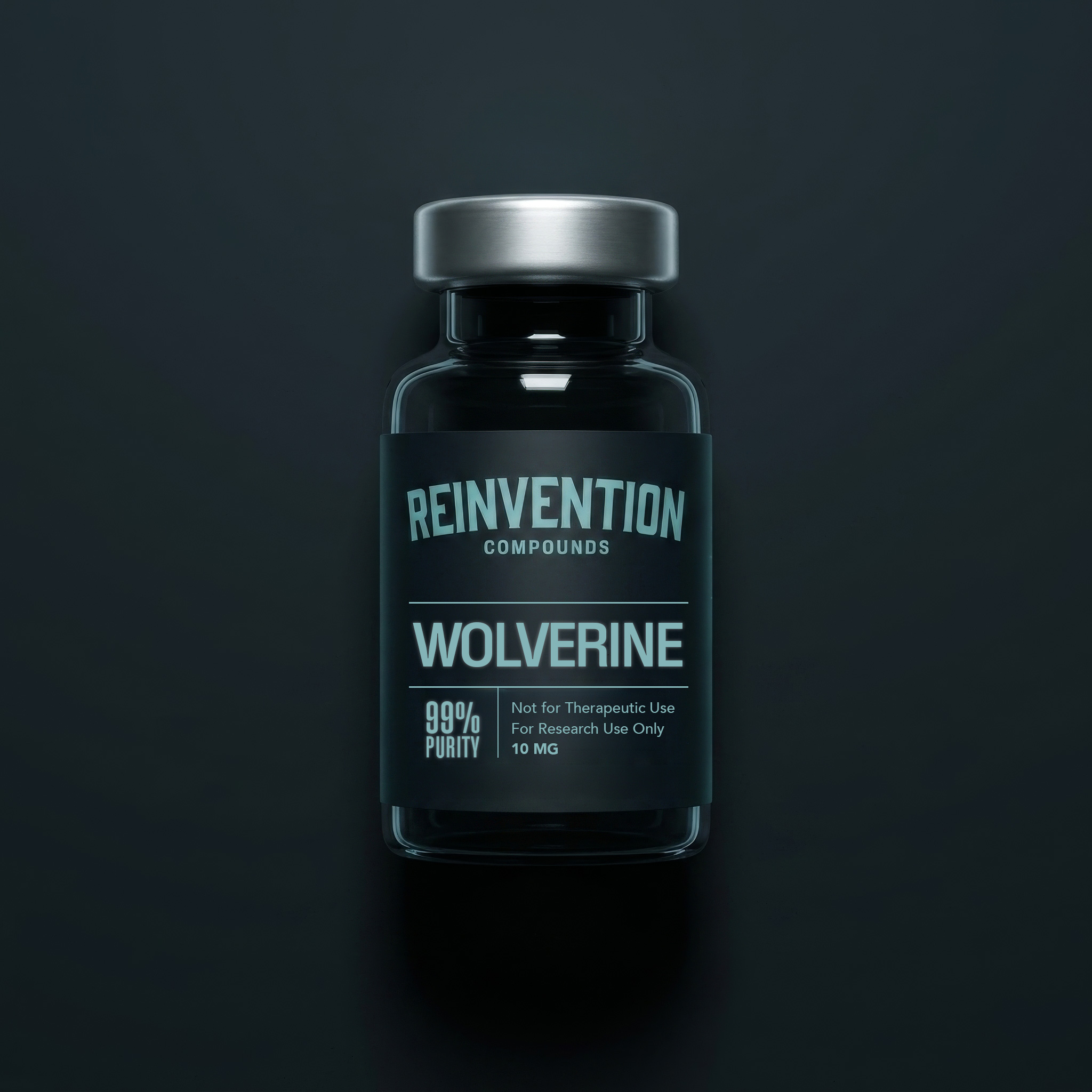



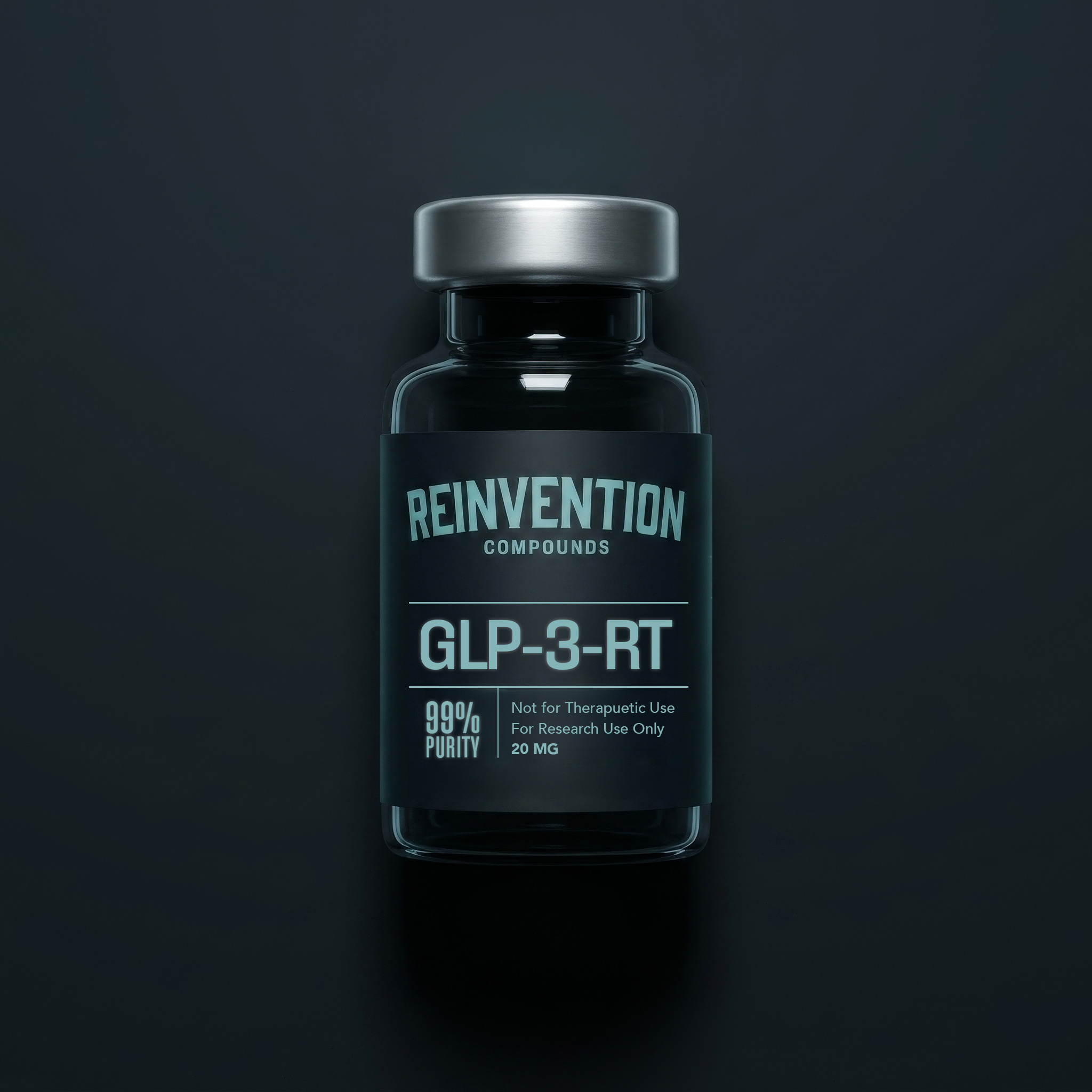
Wolverine Blend Description
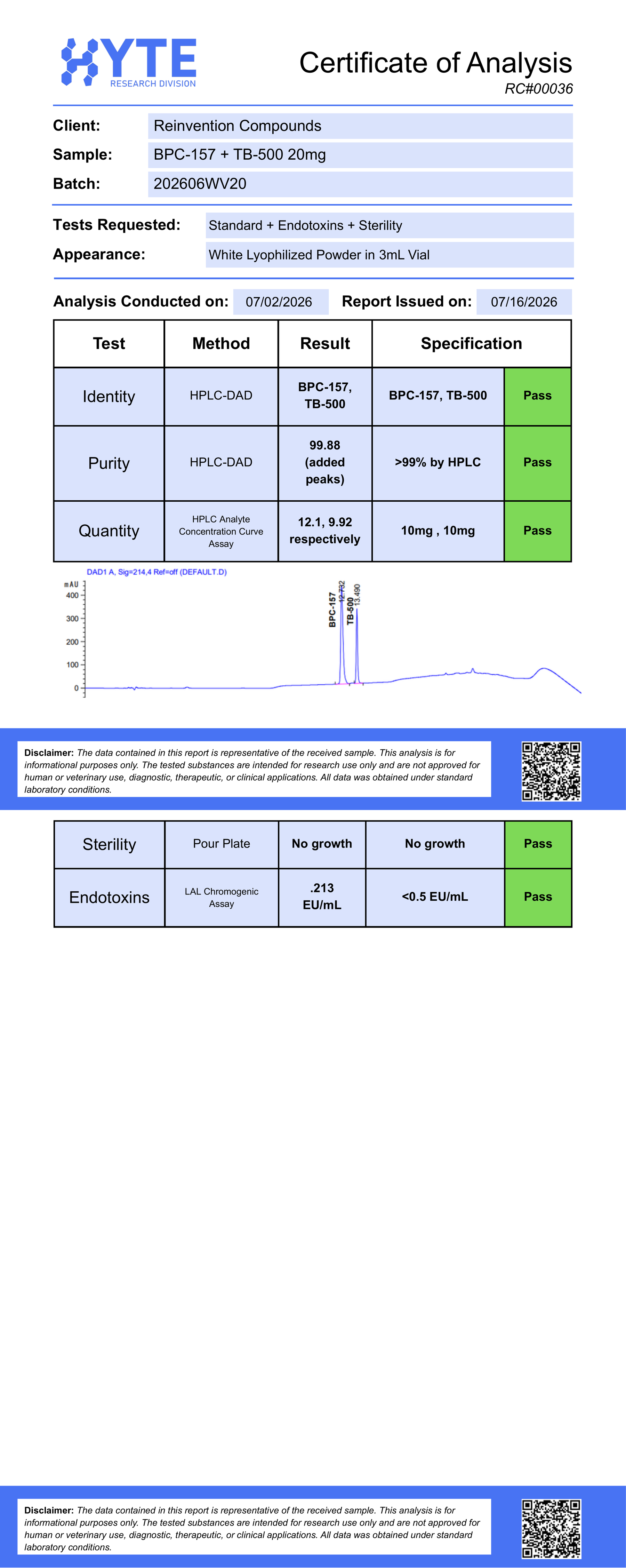
The Wolverine Blend is a 1:1 co-lyophilized research peptide product containing BPC-157 (Body Protection Compound-157) and TB-500 (Thymosin Beta-4). Each 20mg vial contains 10mg of BPC-157 and 10mg of TB-500 as a homogeneous lyophilized blend, formulated for reconstitution and single-vial handling in research protocols where both peptides are studied together.
BPC-157 is a synthetic 15-amino-acid pentadecapeptide derived from a partial sequence of a protective protein found in human gastric juice, with a research profile centered on cytoprotection, angiogenesis, and connective-tissue repair. TB-500 is the synthetic full-length 43-amino-acid Thymosin Beta-4 molecule, one of the most abundant intracellular peptides in mammals, whose primary molecular function is sequestration of G-actin via the conserved LKKTET motif within its sequence — underlying its research profile in cell migration, angiogenesis, and tissue remodeling. The two peptides represent independent and mechanistically distinct research tools within the broader tissue-repair literature.
Both BPC-157 and TB-500 are among the most extensively investigated regenerative research peptides, with substantial preclinical literatures independently characterized. This blended product is studied here strictly as a research peptide product.
Peptide Information
| BPC-157 | |
| Peptide Sequence | Gly-Glu-Pro-Pro-Pro-Gly-Lys-Pro-Ala-Asp-Asp-Ala-Gly-Leu-Val (GEPPPGKPADDAGLV, 15 aa) |
| Molecular Formula | C62H98N16O22 |
| Molecular Weight | 1419.5 g/mol |
| CAS Number | 137525-51-0 |
| PubChem CID | 9941957 |
| Synonyms | Body Protection Compound-157, PL 14736, Pentadecapeptide BPC 157 |
| TB-500 (Thymosin Beta-4) | |
| Peptide Sequence | Ac-Ser-Asp-Lys-Pro-Asp-Met-Ala-Glu-Ile-Glu-Lys-Phe-Asp-Lys-Ser-Lys-Leu-Lys-Lys-Thr-Glu-Thr-Gln-Glu-Lys-Asn-Pro-Leu-Pro-Ser-Lys-Glu-Thr-Ile-Glu-Gln-Glu-Lys-Gln-Ala-Gly-Glu-Ser (43 aa, N-terminal acetylated) |
| Molecular Formula | C212H350N56O78S |
| Molecular Weight | 4963.4 g/mol |
| CAS Number | 77591-33-4 |
| PubChem CID | 16132341 |
| Synonyms | Thymosin Beta-4, Tβ4, TB4, Timbetasin |
| Blend Composition | |
| Total Content | 20mg (10mg BPC-157 + 10mg TB-500, 1:1 ratio) |
| Supplied As | Co-lyophilized acetate salts |
Lyophilized Peptides:
These peptides are freeze-dried, a process that not only extends shelf life but also preserves the purity and integrity of the peptides during storage. We do not use any fillers in this process. The Wolverine Blend should be stored refrigerated and protected from light; keep reconstituted solution refrigerated.
Sealed Vial: 20mg of Lyophilized Powder in 3ml Vial (10mg BPC-157 + 10mg TB-500)
CAS Nos.: 137525-51-0 (BPC-157); 77591-33-4 (TB-500)
Other Names: BPC-157 / Body Protection Compound-157; TB-500 / Thymosin Beta-4
This Product is Not For Human Consumption and is for Laboratory Use Only. Please Read our Terms and Conditions.
Disclaimer: For Research Purposes Only
This content is provided strictly for research purposes and does not constitute an endorsement or recommendation for the non-laboratory application or improper handling of peptides designed for research. The information, including discussions about specific peptides and their researched benefits, is presented for informational purposes only and must not be construed as health, clinical, or legal guidance, nor an encouragement for non-research use. Peptides described here are solely for use in structured scientific study by authorized individuals. We advise consulting with research experts, medical practitioners, or legal counsel prior to any decisions about obtaining or utilizing these peptides. The expectation of responsible, ethical utilization of this information for legitimate investigative and scholarly objectives is paramount. This notice is dynamic and governs all provided content on research peptides.
Wolverine Blend Research
The following sections summarize the research profiles of the two peptides in the Wolverine Blend independently. As with any blended research product, the underlying literature for each component is characterized separately; combined-blend research remains a developing area.
BPC-157 Research
BPC-157’s defining characteristic is broad cytoprotection. Foundational reviews characterize it as a stable gastric pentadecapeptide with anti-inflammatory and wound-healing activity that maintains endothelial integrity across multiple tissue types1. Comprehensive reviews document its acceleration of healing across incisional and internal-tissue models and its role in maintaining gut-barrier integrity2. Among the most cited findings is its effect on tendon healing: research demonstrated that the pentadecapeptide promotes tendon fibroblast outgrowth, cell survival, and cell migration in tendon explant models — a mechanistic basis for the musculoskeletal-repair literature3.
TB-500 (Thymosin Beta-4) Research
Thymosin Beta-4’s defining role is as the principal G-actin-sequestering peptide in eukaryotic cells. Foundational reviews characterize how Tβ4 binds actin monomers via its conserved actin-binding motif to regulate polymerization dynamics and cell migration, framing it as an “actin-sequestering protein that moonlights to repair injured tissues”4. Extensive research documents its promotion of cell migration, angiogenesis, and reduction of apoptosis and inflammation at sites of injury5. Among the most cited findings is its role in cardiac repair: a landmark study reported that Tβ4 activates integrin-linked kinase and Akt and improves cardiac function in injury models — establishing it as a significant target in cardiac regeneration research6. The dermal-repair literature is mature, with research establishing that Tβ4 accelerates closure of full-thickness wounds across multiple animal models7.
Research Considerations
Across the preclinical literature, both peptides are consistently described as well tolerated, with injection-site reactions among the few commonly noted effects. Because both peptides can influence angiogenesis, study designs in oncology-adjacent contexts typically account for this mechanism. As a blended product, study designs also account for the two peptides being reconstituted and handled together rather than independently. These considerations are routinely accounted for within controlled study protocols.
References
- Sikiric, P., Seiwerth, S., Rucman, R., Turkovic, B., Rokotov, D. S., Brcic, L., et al. (2010). Stable gastric pentadecapeptide BPC 157: anti-inflammatory and wound healing agent. Current Pharmaceutical Design, 16(8), 1044–1055. https://doi.org/10.2174/138161210790963869
- Seiwerth, S., Milavic, M., Vukojevic, J., Gojkovic, S., Krezic, I., Vuletic, L. B., et al. (2021). Stable gastric pentadecapeptide BPC 157 and wound healing. Frontiers in Pharmacology, 12, 627533. https://doi.org/10.3389/fphar.2021.627533
- Chang, C. H., Tsai, W. C., Lin, M. S., Hsu, Y. H., & Pang, J. H. (2011). The promoting effect of pentadecapeptide BPC 157 on tendon healing involves tendon outgrowth, cell survival, and cell migration. Journal of Applied Physiology, 110(3), 774–780. https://doi.org/10.1152/japplphysiol.00945.2010
- Goldstein, A. L., Hannappel, E., & Kleinman, H. K. (2005). Thymosin β4: actin-sequestering protein moonlights to repair injured tissues. Trends in Molecular Medicine, 11(9), 421–429. https://doi.org/10.1016/j.molmed.2005.07.004
- Goldstein, A. L., Hannappel, E., Sosne, G., & Kleinman, H. K. (2012). Thymosin β4: a multi-functional regenerative peptide. Basic properties and clinical applications. Expert Opinion on Biological Therapy, 12(1), 37–51. https://doi.org/10.1517/14712598.2012.634793
- Bock-Marquette, I., Saxena, A., White, M. D., DiMaio, J. M., & Srivastava, D. (2004). Thymosin β4 activates integrin-linked kinase and promotes cardiac cell migration, survival and cardiac repair. Nature, 432(7016), 466–472. https://doi.org/10.1038/nature03000
- Malinda, K. M., Sidhu, G. S., Mani, H., Banaudha, K., Maheshwari, R. K., Goldstein, A. L., & Kleinman, H. K. (1999). Thymosin β4 accelerates wound healing. Journal of Investigative Dermatology, 113(3), 364–368. https://doi.org/10.1046/j.1523-1747.1999.00708.x