Click here to Download our free peptide guide

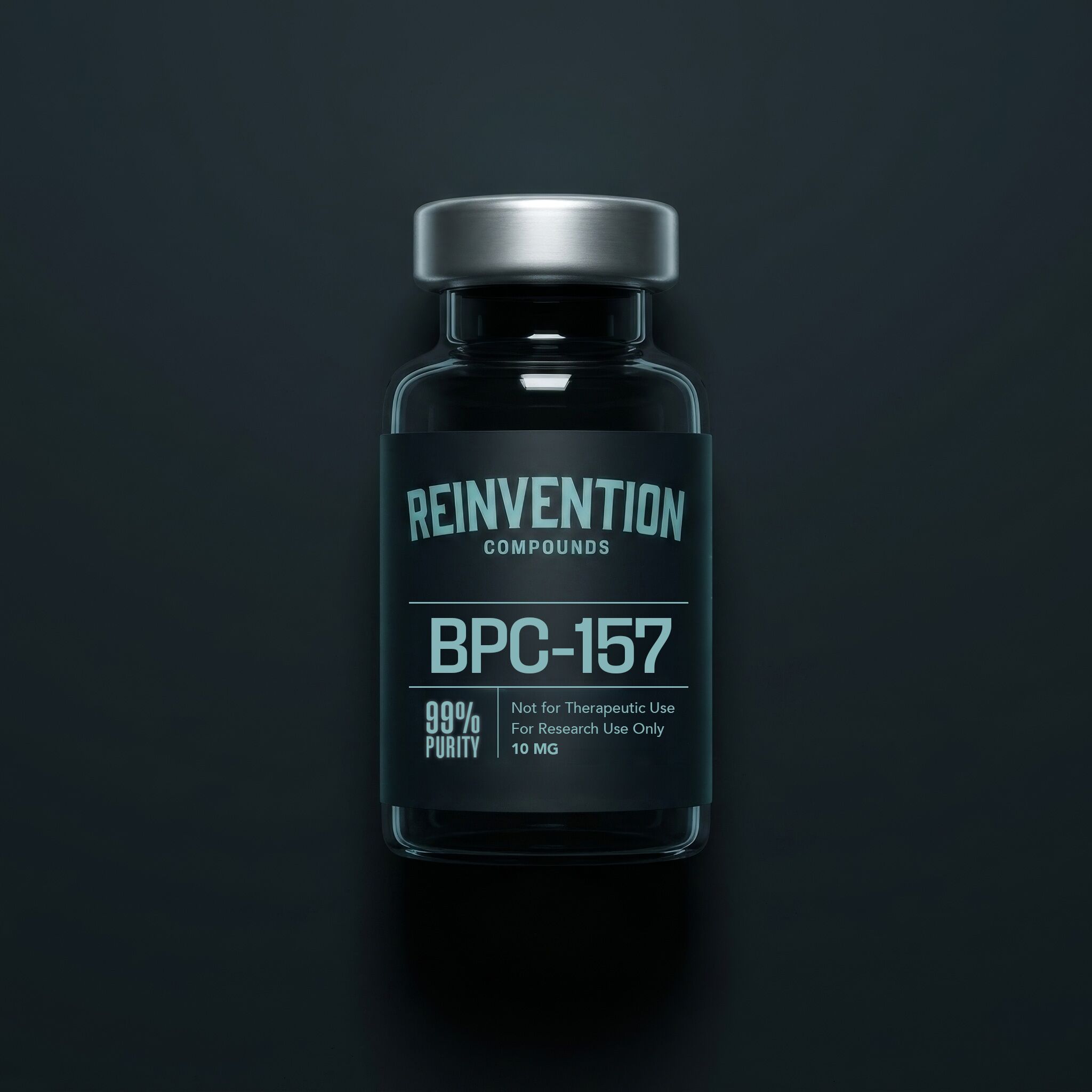
BPC-157 – 10mg

Please note, all orders are processed Monday – Friday 8:00 a.m. – 4:00 p.m. est. Any orders received after 4:00 p.m. est will be processed during the next business day.

Loading...

BPC-157 – 10mg

$69.99

BPC-157 Description

BPC-157 (Body Protection Compound-157) is a synthetic 15-amino-acid pentadecapeptide derived from a protective protein found in human gastric juice, with the sequence Gly-Glu-Pro-Pro-Pro-Gly-Lys-Pro-Ala-Asp-Asp-Ala-Gly-Leu-Val. Unusually for its size, it is stable across a wide pH range and resistant to gastric degradation.

BPC-157 is studied for a broad cytoprotective and regenerative profile. In experimental models it modulates angiogenesis via VEGF and the nitric oxide pathway, reduces pro-inflammatory cytokine signaling, supports fibroblast migration and collagen synthesis, and influences gut-barrier integrity and neural pathways — spanning musculoskeletal, gastrointestinal, and neurological tissue.

BPC-157 is one of the most extensively investigated cytoprotective research peptides, with a preclinical literature spanning over a hundred studies on tendon, ligament, muscle, gastric, and nerve models. This product is being sold for its use in research only.

129 in stock

SKU: BPC10 Category:

You may also like

CJC-1295 (no DAC) + Ipamorelin 1:1 – 10mg

$64.99

TB-500 – 5mg

$49.99

Research Bacteriostatic Water

Price range: $9.99 through $24.99

GHK-Cu

Price range: $29.99 through $44.99

BPC-157 Description

BPC-157 (Body Protection Compound-157) is a synthetic 15-amino-acid peptide (a pentadecapeptide) derived from a partial sequence of a protective protein found in human gastric juice, first isolated and characterized at the University of Zagreb in the early 1990s. Its sequence is Gly-Glu-Pro-Pro-Pro-Gly-Lys-Pro-Ala-Asp-Asp-Ala-Gly-Leu-Val. Unusually for a peptide of its size, it is stable across a wide pH range and resistant to degradation in gastric conditions, a property reflecting its origin as a fragment of a native gastric protein.

BPC-157 is studied for a broad cytoprotective and regenerative profile. In experimental models it modulates angiogenesis (upregulating VEGF/VEGFR2 and the nitric oxide pathway), reduces pro-inflammatory cytokine signaling, supports fibroblast migration and collagen synthesis for connective-tissue repair, and influences gut-barrier integrity and neural pathways — mechanisms that span musculoskeletal, gastrointestinal, and neurological tissue in preclinical research.

BPC-157 is one of the most extensively investigated cytoprotective research peptides, with a preclinical literature spanning over a hundred studies on tendon, ligament, muscle, gastric, and nerve models. It is studied here strictly as a research peptide.

Peptide Information

Peptide Sequence Gly-Glu-Pro-Pro-Pro-Gly-Lys-Pro-Ala-Asp-Asp-Ala-Gly-Leu-Val (GEPPPGKPADDAGLV, 15 aa)
Molecular Formula C62H98N16O22
Molecular Weight 1419.5 g/mol
CAS Number 137525-51-0
PubChem CID 9941957
Synonyms Body Protection Compound-157, PL 14736, Bepecin, Pentadecapeptide BPC 157
Supplied As Acetate salt

Lyophilized Peptides:

These peptides are freeze-dried, a process that not only extends shelf life but also preserves the purity and integrity of the peptides during storage. We do not use any fillers in this process. BPC-157 should be stored refrigerated and protected from light; keep reconstituted solution refrigerated.

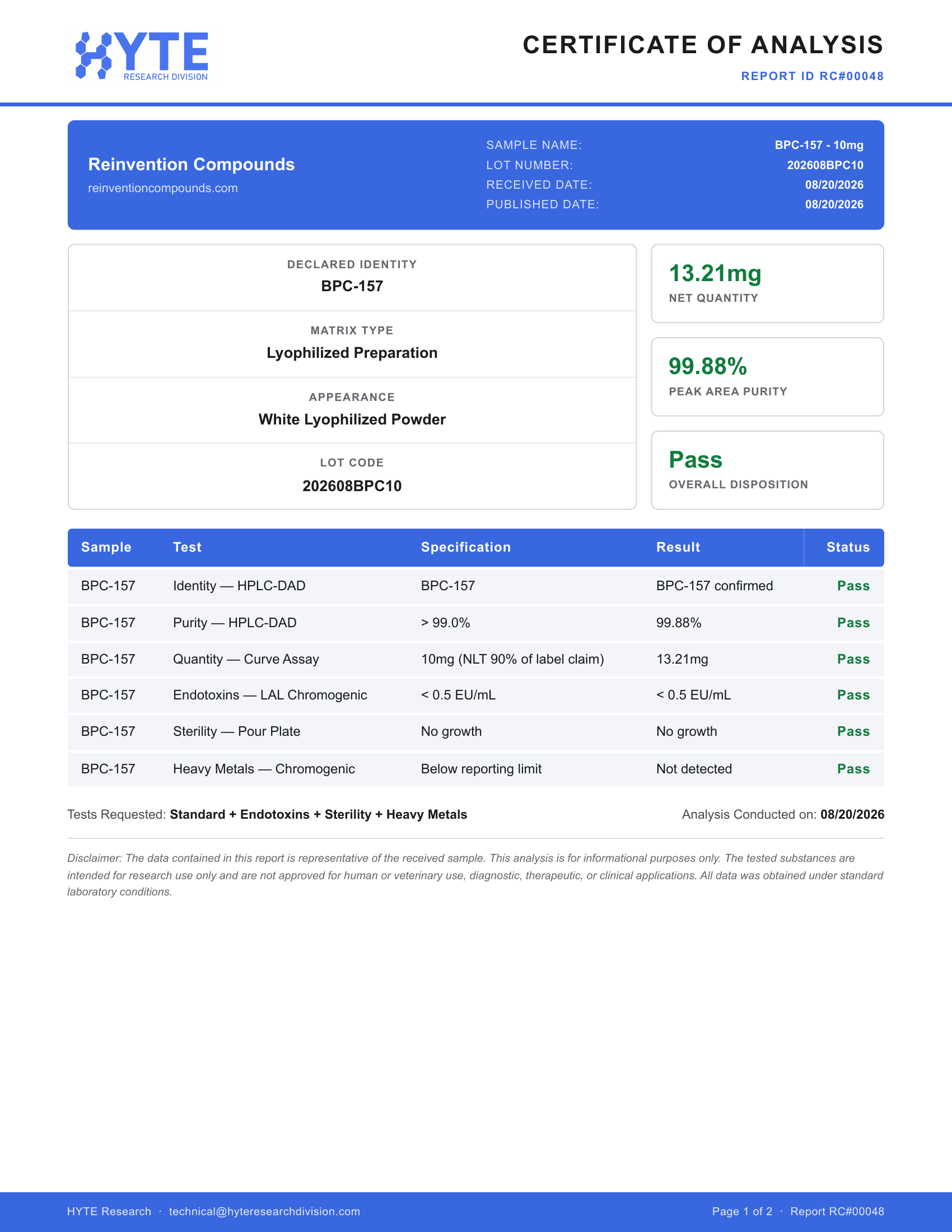
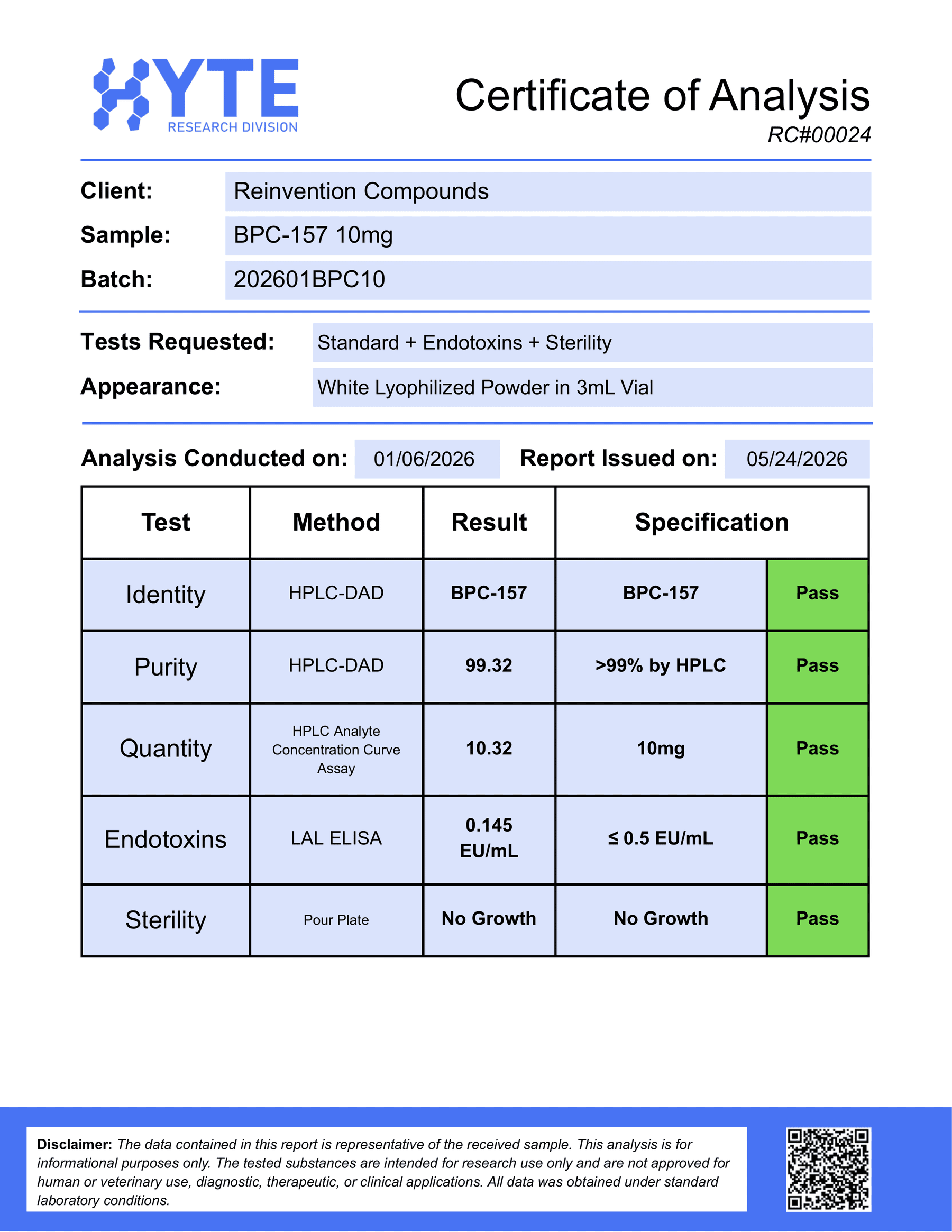
Sealed Vial: 10mg of Lyophilized Powder in 3ml Vial

CAS No.: 137525-51-0

Other Names: Body Protection Compound-157, PL 14736, Pentadecapeptide BPC 157

This Product is Not For Human Consumption and is for Laboratory Use Only. Please Read our Terms and Conditions.

Disclaimer: For Research Purposes Only
This content is provided strictly for research purposes and does not constitute an endorsement or recommendation for the non-laboratory application or improper handling of peptides designed for research. The information, including discussions about specific peptides and their researched benefits, is presented for informational purposes only and must not be construed as health, clinical, or legal guidance, nor an encouragement for non-research use. Peptides described here are solely for use in structured scientific study by authorized individuals. We advise consulting with research experts, medical practitioners, or legal counsel prior to any decisions about obtaining or utilizing these peptides. The expectation of responsible, ethical utilization of this information for legitimate investigative and scholarly objectives is paramount. This notice is dynamic and governs all provided content on research peptides.

BPC-157 Research

The following sections explore the diverse applications and mechanisms of BPC-157 across multiple research domains. As one of the most extensively studied cytoprotective peptides, it has a deep preclinical literature spanning tissue repair, gastrointestinal protection, angiogenesis, and the nitric oxide system.

This overview synthesizes key findings on its cytoprotective mechanism and experimental applications in wound healing, tendon repair, gastrointestinal models, and angiomodulation.

Cytoprotective Mechanism

BPC-157’s defining characteristic is broad cytoprotection. Foundational reviews characterize it as a stable gastric pentadecapeptide with anti-inflammatory and wound-healing activity that maintains endothelial integrity and mediates an organoprotective response across multiple tissue types1. Its stability in gastric juice and lack of reported toxicity in early inflammatory-bowel-disease clinical work are recurring features of the literature2.

Wound Healing Research

The wound-healing literature is the most developed. Comprehensive reviews document BPC-157’s acceleration of healing across incisional/excisional wounds, burns, diabetic ulcers, and multiple internal tissue types in preclinical models, linking its effects to angiogenesis, collagen organization, and growth-factor modulation3.

Tendon and Musculoskeletal Repair

Among the most cited findings is BPC-157’s effect on tendon healing. Research demonstrated that the pentadecapeptide promotes tendon fibroblast outgrowth, cell survival, and cell migration in tendon explant models — providing a mechanistic basis for the musculoskeletal-repair findings widely reported in the preclinical literature4.

Gastrointestinal Research

BPC-157 was originally identified as an anti-ulcer agent, and the gastrointestinal literature remains central. Reviews describe its protection and accelerated mucosal healing in models of gastric and intestinal injury, including NSAID-induced damage and colitis models, alongside its role in maintaining gut-barrier integrity2.

Angiomodulation and the Nitric Oxide System

A defining mechanistic theme is BPC-157’s angiomodulatory activity. Research characterizes its modulation of the nitric oxide system and promotion of angiogenesis — upregulating VEGF signaling and supporting endothelial function — as a unifying mechanism linking its diverse tissue-repair effects5.

Research Considerations

Across the preclinical literature, BPC-157 is consistently described as well tolerated with no established lethal dose in animal toxicology, and injection-site reactions among the few commonly noted effects. Because its activity centers on angiogenesis modulation, study designs in oncology-adjacent contexts typically account for this mechanism. These considerations are routinely accounted for within controlled study protocols.

References

  1. Sikiric, P., Seiwerth, S., Rucman, R., Turkovic, B., Rokotov, D. S., Brcic, L., et al. (2010). Stable gastric pentadecapeptide BPC 157: anti-inflammatory and wound healing agent. Current Pharmaceutical Design, 16(8), 1044–1055. https://doi.org/10.2174/138161210790963869
  2. Sikiric, P., Seiwerth, S., Rucman, R., Turkovic, B., Rokotov, D. S., Brcic, L., et al. (2011). Stable gastric pentadecapeptide BPC 157: novel therapy in gastrointestinal tract. Current Pharmaceutical Design, 17(16), 1612–1632. https://doi.org/10.2174/138161211796196954
  3. Seiwerth, S., Milavic, M., Vukojevic, J., Gojkovic, S., Krezic, I., Vuletic, L. B., et al. (2021). Stable gastric pentadecapeptide BPC 157 and wound healing. Frontiers in Pharmacology, 12, 627533. https://doi.org/10.3389/fphar.2021.627533
  4. Chang, C. H., Tsai, W. C., Lin, M. S., Hsu, Y. H., & Pang, J. H. (2011). The promoting effect of pentadecapeptide BPC 157 on tendon healing involves tendon outgrowth, cell survival, and cell migration. Journal of Applied Physiology, 110(3), 774–780. https://doi.org/10.1152/japplphysiol.00945.2010
  5. Hsieh, M. J., Liu, H. T., Wang, C. N., Huang, H. Y., Lin, Y., Ko, Y. S., et al. (2017). Therapeutic potential of pro-angiogenic BPC157 is associated with VEGFR2 activation and up-regulation. Journal of Molecular Medicine, 95(3), 323–333. https://doi.org/10.1007/s00109-016-1488-y
{{ reviewsTotal }}{{ options.labels.singularReviewCountLabel }}
{{ reviewsTotal }}{{ options.labels.pluralReviewCountLabel }}
{{ options.labels.newReviewButton }}
{{ userData.canReview.message }}

Related Products

DSIP – 10mg

$49.99

KPV – 10mg

$54.99

KLOW Blend – 80mg (BPC-157 + TB-500 + GHK-Cu + KPV)

$119.99

Oxytocin Acetate – 5mg

$39.99

Join Waitlist We will inform you when the product arrives in stock. Please leave your valid email address below.