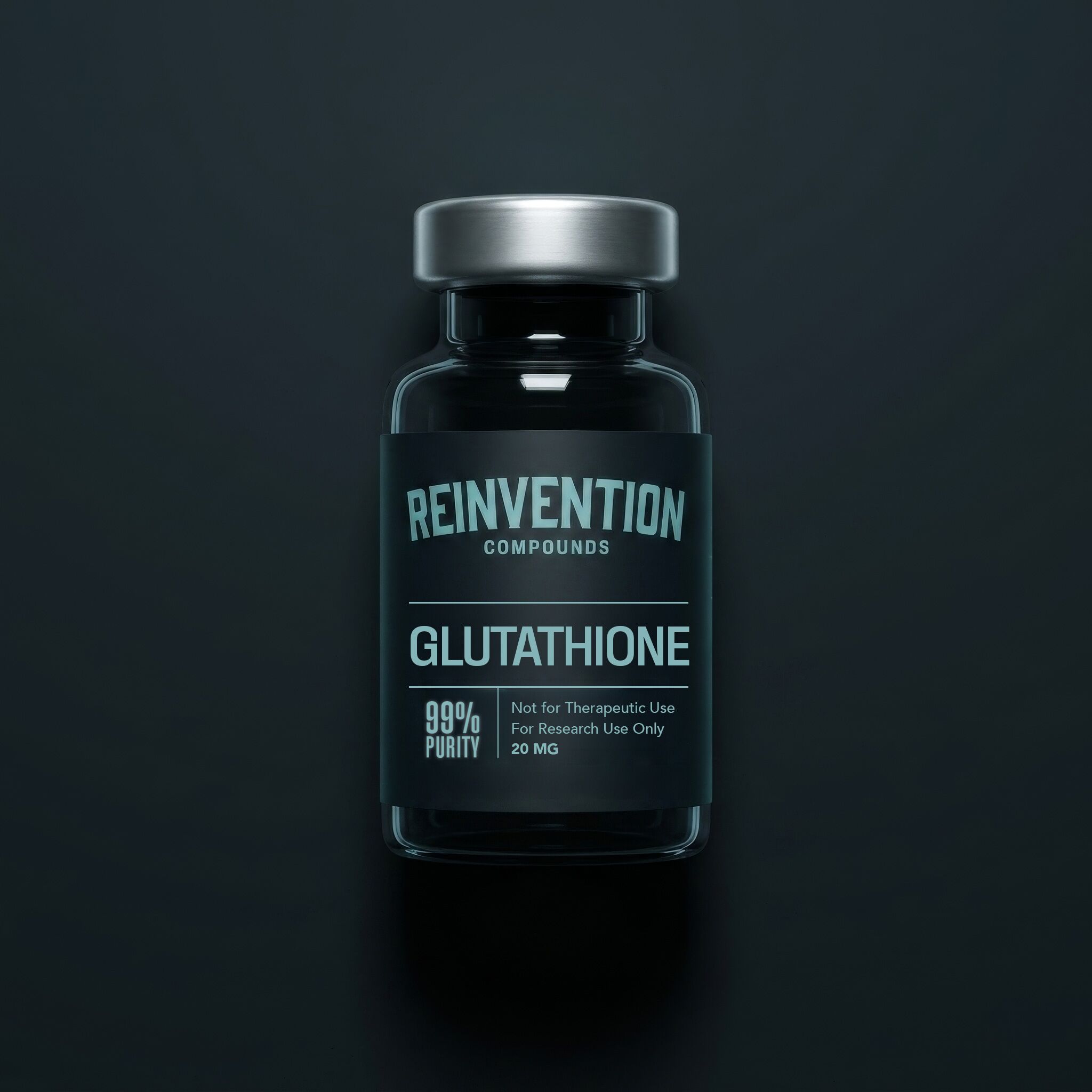
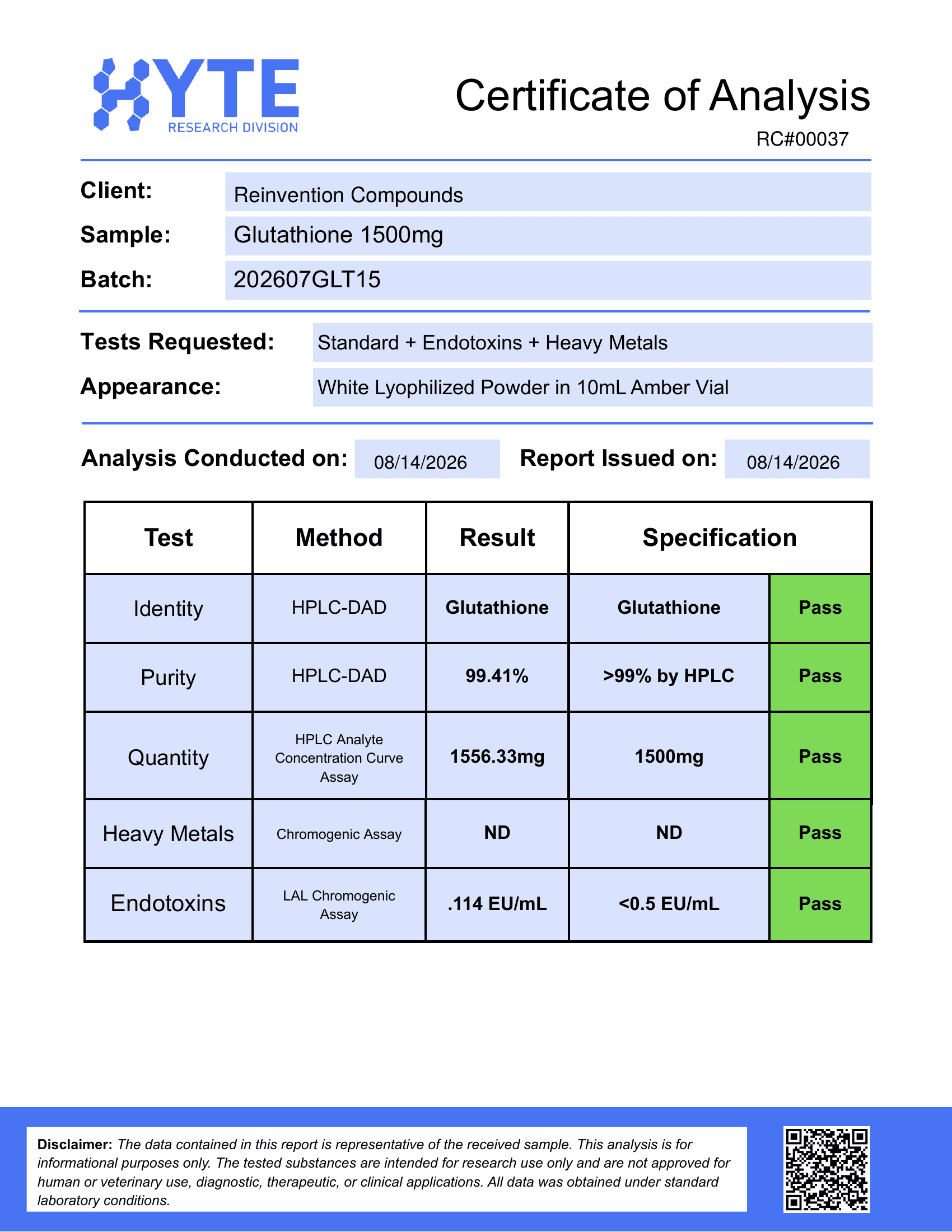
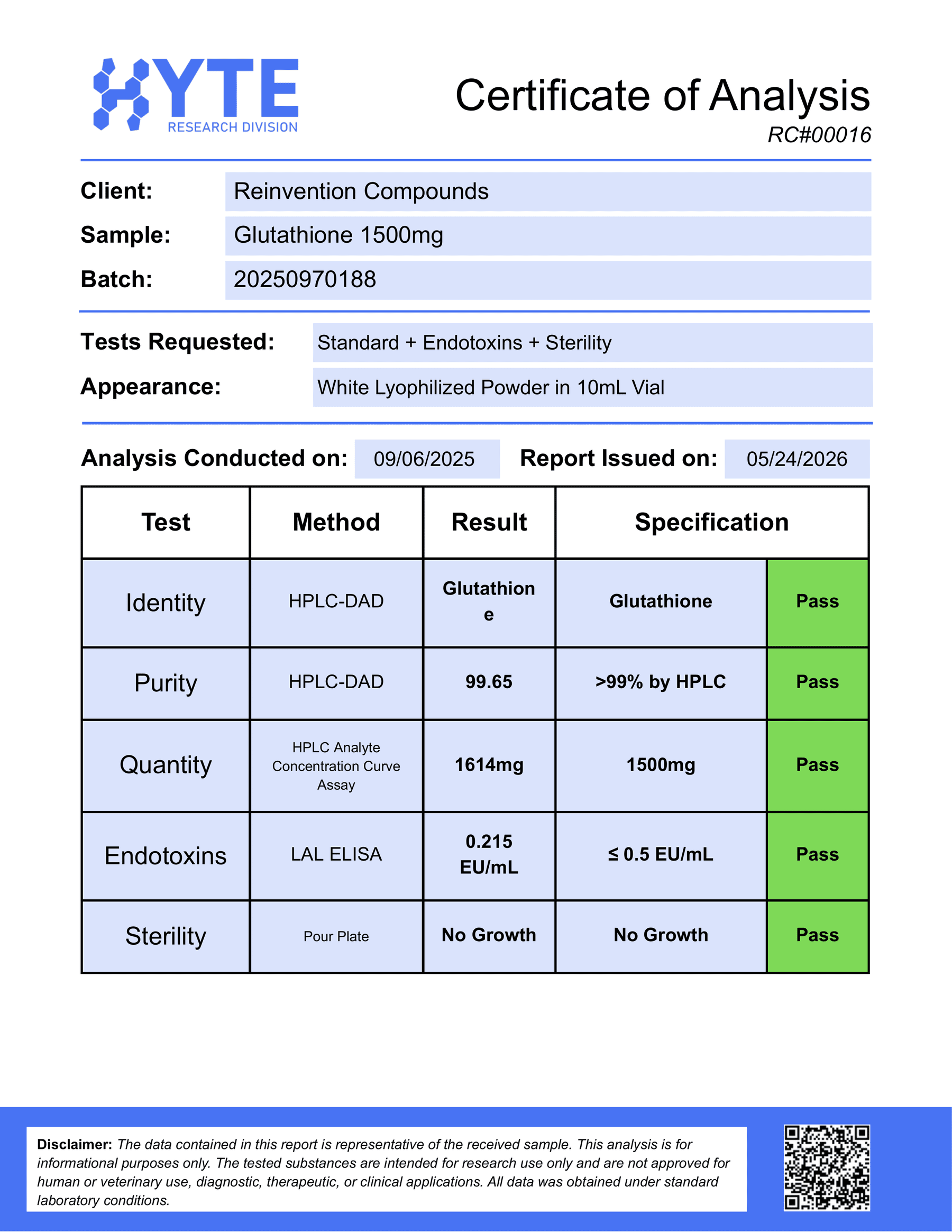
Glutathione Description
Glutathione (GSH) is a tripeptide composed of three amino acids — glutamic acid, cysteine, and glycine — joined by an unusual gamma peptide linkage between glutamate and cysteine that protects it from breakdown by standard peptidases. It is the most abundant endogenous (non-protein) thiol antioxidant in human cells, present at millimolar concentrations in tissues, and is naturally synthesized in the liver. Glutathione exists in two interconverting states: the reduced form (GSH) and the oxidized disulfide form (GSSG); in healthy cells, over 90% of the total pool is maintained in the reduced state.
Glutathione functions as a central regulator of cellular redox balance. It neutralizes free radicals and reactive oxygen species by donating reducing equivalents, serves as the essential electron donor for glutathione peroxidase (GPx) in reducing hydrogen peroxide and lipid peroxides, and acts as a nucleophilic co-substrate for glutathione S-transferase (GST) in conjugating and detoxifying xenobiotics and heavy metals. The GSH/GSSG ratio is widely used as a biomarker of cellular oxidative stress.
Because tissue glutathione levels decline with age and under oxidative or toxic load, GSH has been extensively studied as a research compound in models of redox homeostasis, detoxification, immune function, and oxidative-stress-related conditions. This product is studied strictly as a research compound.
Peptide Information
| Peptide Sequence | γ-L-Glutamyl-L-cysteinyl-glycine (γ-Glu-Cys-Gly) |
| Molecular Formula | C10H17N3O6S |
| Molecular Weight | 307.32 g/mol |
| CAS Number | 70-18-8 |
| PubChem CID | 124886 |
| Synonyms | GSH, L-Glutathione (reduced), Reduced Glutathione, γ-glutamylcysteinylglycine |
Lyophilized Peptides:
This compound is freeze-dried, a process that not only extends shelf life but also preserves the purity and integrity of the compound during storage. We do not use any fillers in this process. Glutathione is sensitive to oxidation; store protected from light and air, and keep reconstituted solution refrigerated.
Sealed Vial: 1500mg of Lyophilized Powder
CAS No.: 70-18-8
Other Names: GSH, L-Glutathione (reduced form), Reduced Glutathione
This Product is Not For Human Consumption and is for Laboratory Use Only. Please Read our Terms and Conditions.
Disclaimer: For Research Purposes Only
This content is provided strictly for research purposes and does not constitute an endorsement or recommendation for the non-laboratory application or improper handling of compounds designed for research. The information, including discussions about specific compounds and their researched benefits, is presented for informational purposes only and must not be construed as health, clinical, or legal guidance, nor an encouragement for non-research use. Compounds described here are solely for use in structured scientific study by authorized individuals. We advise consulting with research experts, medical practitioners, or legal counsel prior to any decisions about obtaining or utilizing these compounds. The expectation of responsible, ethical utilization of this information for legitimate investigative and scholarly objectives is paramount. This notice is dynamic and governs all provided content on research compounds.
Glutathione Research
The following sections explore the diverse applications and mechanisms of Glutathione across multiple research domains. As the body’s principal endogenous antioxidant, GSH has one of the deepest research literatures of any biological molecule, spanning redox biology, detoxification, immune function, and oxidative-stress-related research.
This overview synthesizes key findings on its mechanism and experimental applications in redox homeostasis, supplementation and bioavailability, immune function, and oxidative stress.
Redox Homeostasis and Antioxidant Mechanism
Glutathione’s defining role is as the central regulator of cellular redox state. Foundational reviews describe how GSH maintains protein thiol groups in their reduced form, serves as the cofactor for glutathione peroxidase in detoxifying peroxides, and how the GSH/GSSG ratio functions as a key indicator of cellular oxidative status1. The biosynthesis pathway — the ATP-dependent, rate-limiting formation of γ-glutamylcysteine followed by glycine addition — is among the most thoroughly characterized in redox biology2.
Supplementation and Bioavailability Research
A central research question has been whether exogenous glutathione can raise body stores. A 6-month randomized, double-blind, placebo-controlled trial in 54 healthy adults found that oral GSH supplementation at 250 or 1,000 mg/day significantly increased glutathione levels in blood, erythrocytes, plasma, and lymphocytes versus baseline, with the high-dose group showing the largest increases — the first controlled human evidence that sustained oral GSH raises body compartment stores3. Subsequent controlled research on liposomal GSH reported elevations in body GSH stores accompanied by reductions in oxidative-stress biomarkers and changes in immune markers4.
Immune Function Research
Glutathione has been extensively studied for its role in immune regulation. Research reviews document GSH’s involvement in T-cell proliferation, macrophage and lymphocyte function, and modulation of inflammatory signaling, with glutathione status influencing the function and balance of immune responses5.
Detoxification and Cellular Protection
As the substrate for glutathione S-transferase, GSH is central to phase II detoxification, conjugating reactive electrophiles, xenobiotics, and heavy metals into water-soluble derivatives for excretion. Comprehensive reviews characterize this role alongside its function in maintaining redox balance and protecting DNA, proteins, and lipids from oxidative damage1,2.
Research Considerations
The research literature notes that orally administered glutathione has historically been characterized by limited bioavailability due to peptidase degradation and the absence of a dedicated membrane transporter — a factor that informed the development of alternative delivery formats studied in the supplementation literature3,4. In characterized research, glutathione is consistently described as well tolerated. These considerations are routinely accounted for within controlled study protocols.
References
- Pizzorno, J. (2014). Glutathione! Integrative Medicine (Encinitas), 13(1), 8–12. https://pmc.ncbi.nlm.nih.gov/articles/PMC4684116/
- Lu, S. C. (2013). Glutathione synthesis. Biochimica et Biophysica Acta (BBA) – General Subjects, 1830(5), 3143–3153. https://doi.org/10.1016/j.bbagen.2012.09.008
- Richie, J. P., Nichenametla, S., Neidig, W., Calcagnotto, A., Haley, J. S., Schell, T. D., & Muscat, J. E. (2015). Randomized controlled trial of oral glutathione supplementation on body stores of glutathione. European Journal of Nutrition, 54(2), 251–263. https://doi.org/10.1007/s00394-014-0706-z
- Sinha, R., Sinha, I., Calcagnotto, A., Trushin, N., Haley, J. S., Schell, T. D., & Richie, J. P. (2018). Oral supplementation with liposomal glutathione elevates body stores of glutathione and markers of immune function. European Journal of Clinical Nutrition, 72(1), 105–111. https://doi.org/10.1038/ejcn.2017.132
- Allen, J., & Bradley, R. D. (2011). Effects of oral glutathione supplementation on systemic oxidative stress biomarkers in human volunteers. Journal of Alternative and Complementary Medicine, 17(9), 827–833. https://doi.org/10.1089/acm.2010.0716
