

Tesofensine Description
Tesofensine (development code NS-2330) is a synthetic small-molecule triple monoamine reuptake inhibitor of the tropane class, originally developed by NeuroSearch A/S (Denmark) in the late 1990s. Its molecular structure is (1R,2R,3S)-3-(3,4-dichlorophenyl)-2-(ethoxymethyl)-8-methyl-8-azabicyclo[3.2.1]octane — a chlorinated bicyclic tertiary amine that enables high-affinity interaction with the presynaptic dopamine, norepinephrine, and serotonin transporters (DAT, NET, and SERT respectively). It is not a peptide; it is a small-molecule central nervous system compound structurally and pharmacologically related to the tropane monoamine reuptake inhibitor class.
Tesofensine’s defining pharmacology is potent, balanced triple inhibition of the three monoamine transporters, with reported in vitro IC50 values of approximately 6.5–8 nM at DAT, 1.7–3 nM at NET, and 11 nM at SERT. This transporter blockade elevates synaptic dopamine, norepinephrine, and serotonin concentrations in the hypothalamus and other CNS regions, producing the compound’s characteristic anorexigenic and energy-expenditure profile in preclinical and clinical characterization. Preclinical mechanistic research has attributed the appetite-suppressive effect to indirect stimulation of α1-adrenoceptor and dopamine D1 receptor pathways, with more recent work identifying circuit-level effects on GABAergic neurons in the lateral hypothalamus.
Tesofensine was originally developed as a candidate therapeutic for Alzheimer’s disease and Parkinson’s disease before being repositioned into obesity research after dose-dependent weight reduction was observed as a secondary endpoint in the neurodegenerative-disease trials. Its Phase II obesity program reported one of the largest placebo-subtracted weight-loss magnitudes of any anti-obesity monotherapy at the time. It is one of the most extensively characterized triple monoamine reuptake inhibitors in the modern research literature. It is studied here strictly as a research compound.
Compound Information
Encapsulated Compound:
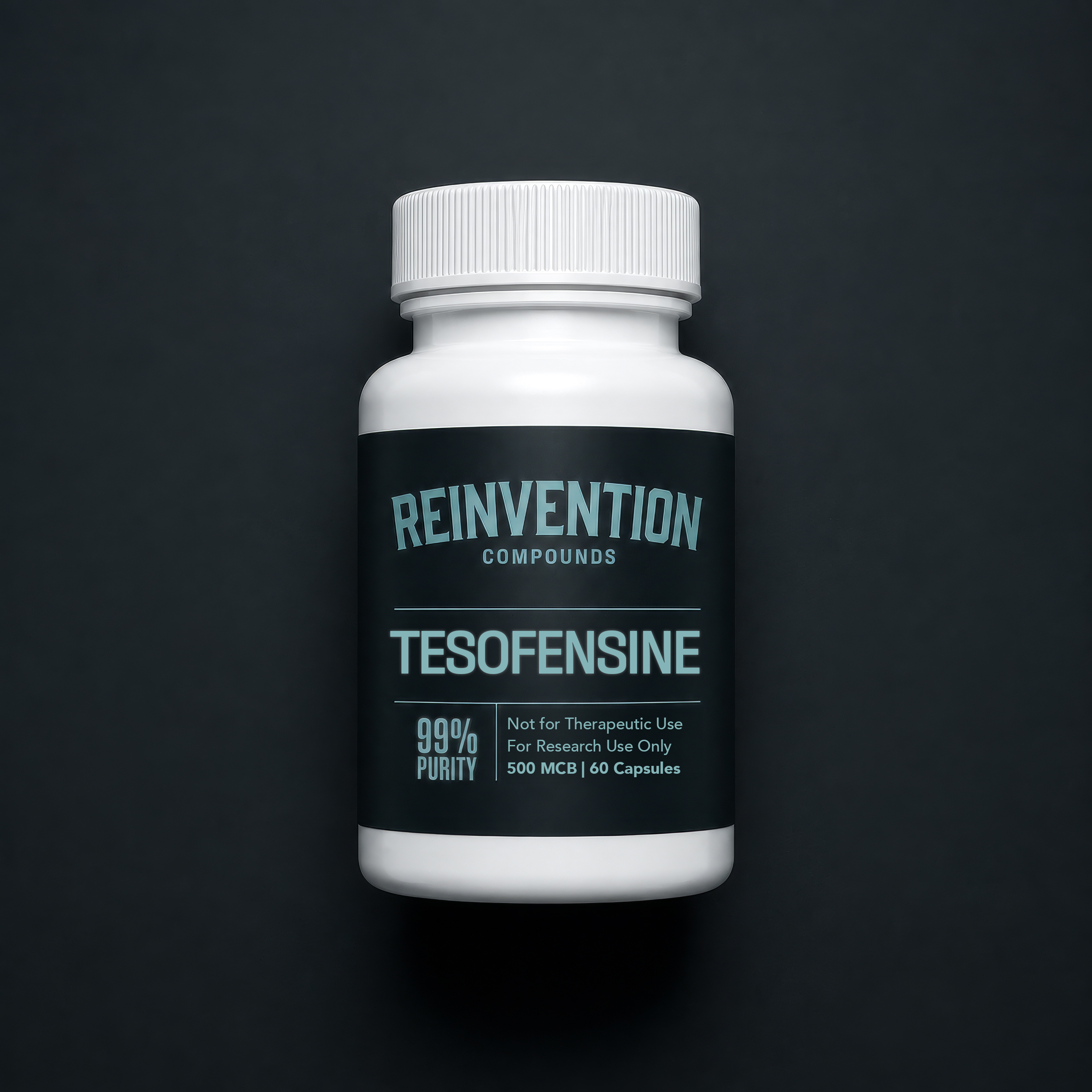
This product is supplied as pre-measured tesofensine free base in gelatin capsules, packaged in a light-restricting amber bottle. Store at room temperature in a cool, dry place. Keep tightly closed. Protect from light and moisture.
Sealed Bottle: 60 capsules, 500 mcg tesofensine per capsule (30mg total tesofensine per bottle)
CAS No.: 195875-84-4
Other Names: NS-2330, Tesofensine free base
This Product is Not For Human Consumption and is for Laboratory Use Only. Please Read our Terms and Conditions.
Disclaimer: For Research Purposes Only
This content is provided strictly for research purposes and does not constitute an endorsement or recommendation for the non-laboratory application or improper handling of this compound. The information, including discussions about tesofensine and its researched properties, is presented for informational purposes only and must not be construed as health, clinical, or legal guidance, nor an encouragement for non-research use. This compound is solely for use in structured scientific study by authorized individuals. We advise consulting with research experts, medical practitioners, or legal counsel prior to any decisions about obtaining or utilizing this compound. The expectation of responsible, ethical utilization of this information for legitimate investigative and scholarly objectives is paramount. This notice is dynamic and governs all provided content on research compounds.
Tesofensine Research
The following sections explore the diverse applications and mechanisms of tesofensine across multiple research domains. As one of the most extensively characterized triple monoamine reuptake inhibitors in the modern research literature, it has a defined pharmacology and a well-published Phase II obesity program.
This overview synthesizes key findings on its transporter mechanism and experimental applications in appetite regulation, body-weight outcomes, energy metabolism, and hypothalamic circuit signaling.
Triple Monoamine Reuptake Inhibitor Mechanism
Tesofensine’s defining pharmacology is potent inhibition of the presynaptic reuptake of dopamine, norepinephrine, and serotonin, elevating synaptic monoamine concentrations across the central nervous system. Preclinical mechanistic research demonstrated that the appetite-suppressive effect in diet-induced obese rats is mediated indirectly through α1-adrenoceptor and dopamine D1 receptor pathways, and can be reversed by pretreatment with the α1 antagonist prazosin or the D1 antagonist SCH23390 — establishing the receptor-level basis of the anorexigenic response1.
Phase II Obesity Trial
The pivotal Phase II clinical trial was a 24-week randomized, double-blind, placebo-controlled study conducted across five Danish obesity clinics, evaluating tesofensine at 0.25 mg, 0.5 mg, and 1.0 mg once-daily doses combined with an energy-restricted diet in adults with obesity. Research reported placebo-subtracted weight loss of approximately 4.5%, 9.2%, and 10.6% at the three doses respectively at 24 weeks — among the largest weight-outcome magnitudes reported for any anti-obesity monotherapy at the time2.
Energy Metabolism Research
A subsequent characterization study evaluated the compound’s effects on 24-hour energy expenditure, fat oxidation, and appetite in overweight and moderately obese men using respiration chamber measurement. Research reported that tesofensine administration reduced appetite ratings and produced a modest increase in 24-hour fat oxidation, alongside preservation of resting energy expenditure that would otherwise be expected to decline during caloric restriction — a metabolic profile that may contribute to the compound’s weight-outcome magnitude3.
Hypothalamic Circuit Research
Recent research has extended mechanistic understanding beyond the transporter level. A 2023 study reported that tesofensine silences GABAergic neurons in the lateral hypothalamus — a brain region central to feeding regulation — providing a circuit-level mechanism for its anorexigenic activity distinct from the well-established transporter pharmacology4.
Research Considerations
Across the clinical literature, the most commonly reported effects of tesofensine were dose-dependent and included dry mouth, sleep disturbance, gastrointestinal effects, elevations in resting heart rate and blood pressure, and changes in mood assessments. Because the compound directly inhibits the serotonin transporter, study designs routinely account for interactions with other serotonergic agents. The compound has an elimination half-life of approximately 220 hours (~9 days) and an active metabolite (M1) with a longer half-life, and is primarily metabolized via CYP3A4, both features that inform study design. The pharmaceutical development program was discontinued, and the compound is not FDA-approved for any indication; it is currently approved only in Mexico as tesofensine citrate under the brand name Tesomet. These considerations are routinely accounted for within controlled study protocols.
References
- Axel, A. M., Mikkelsen, J. D., & Hansen, H. H. (2010). Tesofensine, a novel triple monoamine reuptake inhibitor, induces appetite suppression by indirect stimulation of α1 adrenoceptor and dopamine D1 receptor pathways in the diet-induced obese rat. Neuropsychopharmacology, 35(7), 1464–1476. https://doi.org/10.1038/npp.2010.16
- Astrup, A., Madsbad, S., Breum, L., Jensen, T. J., Kroustrup, J. P., & Larsen, T. M. (2008). Effect of tesofensine on bodyweight loss, body composition, and quality of life in obese patients: a randomised, double-blind, placebo-controlled trial. The Lancet, 372(9653), 1906–1913. https://doi.org/10.1016/S0140-6736(08)61525-1
- Sjödin, A., Gasteyger, C., Nielsen, A. L., Raben, A., Mikkelsen, J. D., Jensen, J. K., et al. (2010). The effect of the triple monoamine reuptake inhibitor tesofensine on energy metabolism and appetite in overweight and moderately obese men. International Journal of Obesity, 34(11), 1634–1643. https://doi.org/10.1038/ijo.2010.87
- Perez, C. I., Luis-Islas, J., Lopez, A., Diaz, X., Molina, O., Arroyo, B., et al. (2023). Tesofensine, a novel antiobesity drug, silences GABAergic hypothalamic neurons. PLOS ONE, 18(8), e0289571. https://doi.org/10.1371/journal.pone.0289571