
Click here to Download our free peptide guide

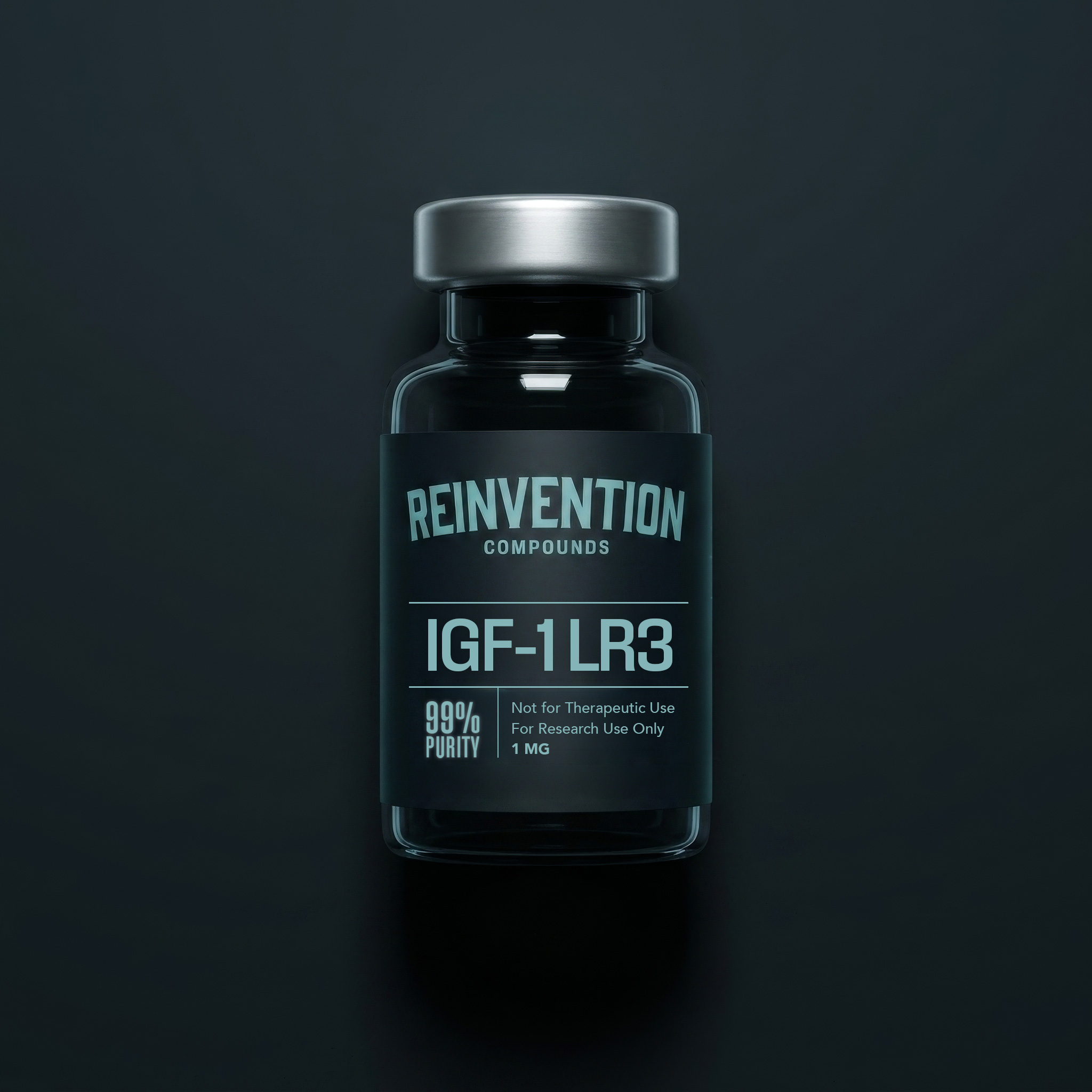
IGF-1 LR3 – 1mg

Please note, all orders are processed Monday – Friday 8:00 a.m. – 4:00 p.m. est. Any orders received after 4:00 p.m. est will be processed during the next business day.

Loading...

IGF-1 LR3 – 1mg

Original price was: $73.99.Current price is: $62.89.

IGF-1 LR3 Description

IGF-1 LR3 (Long Arginine 3-Insulin-like Growth Factor-1) is an 83-amino acid synthetic analog of human insulin-like growth factor-1, structurally modified with an arginine substitution at the third position and a 13-amino acid N-terminal extension. These changes sharply reduce its binding to IGF-binding proteins, allowing it to remain biologically active far longer than native IGF-1.

IGF-1 LR3 acts primarily as an agonist at the IGF-1 receptor (IGF-1R), with research describing a half-life of approximately 20–30 hours and roughly three times the potency of unmodified IGF-1 in experimental models. It activates the PI3K/Akt/mTOR and MAPK/ERK pathways central to protein synthesis, cellular proliferation, and muscle repair signaling.

Due to its sustained receptor activity and resistance to binding-protein sequestration, IGF-1 LR3 has been widely studied as a research tool in skeletal muscle hypertrophy, satellite cell activation, and muscle-wasting and sarcopenia models. This product is being sold for its use in research only.

14 in stock

SKU: IGF1 Category:

You may also like

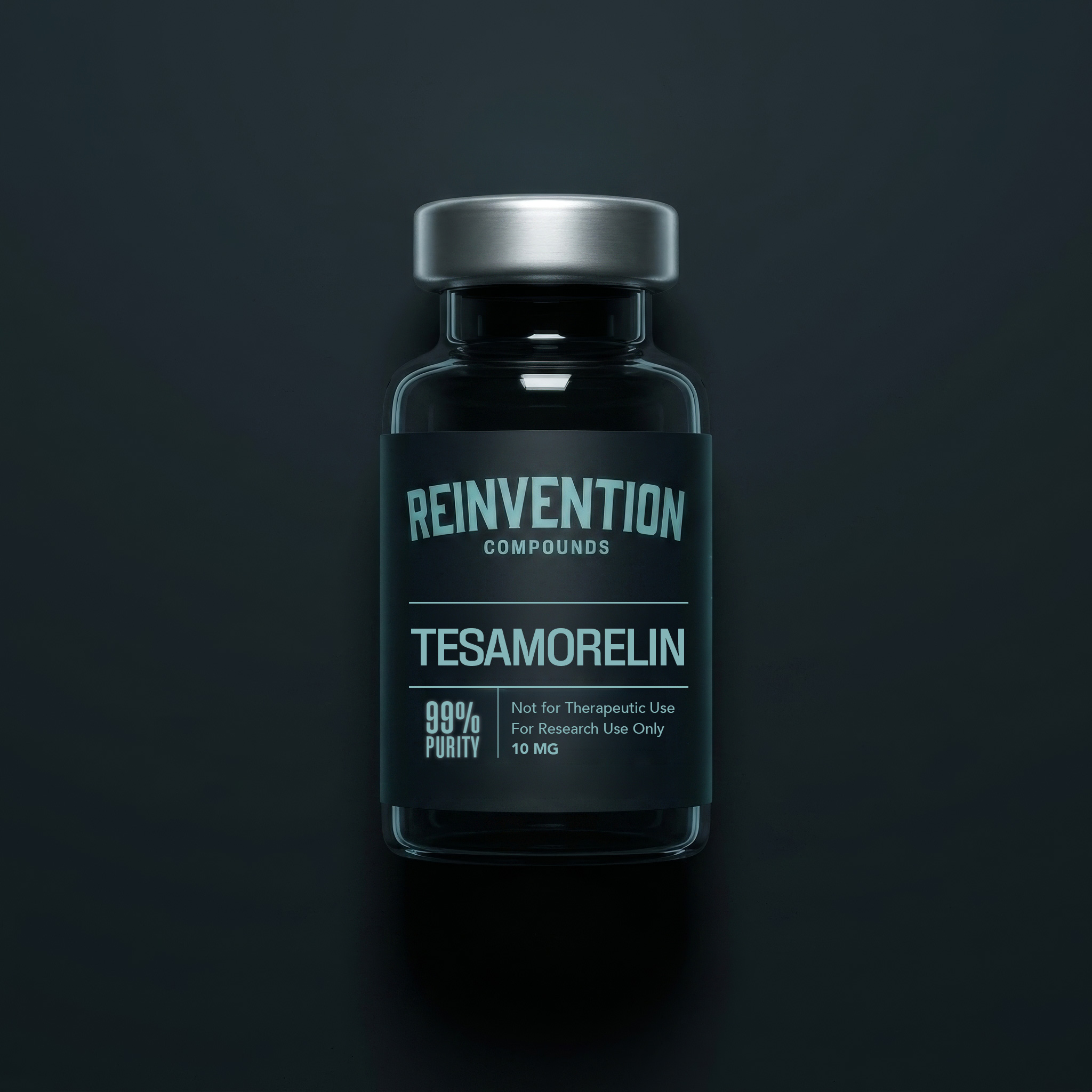
Tesamorelin – 10mg

Original price was: $84.99.Current price is: $72.24.

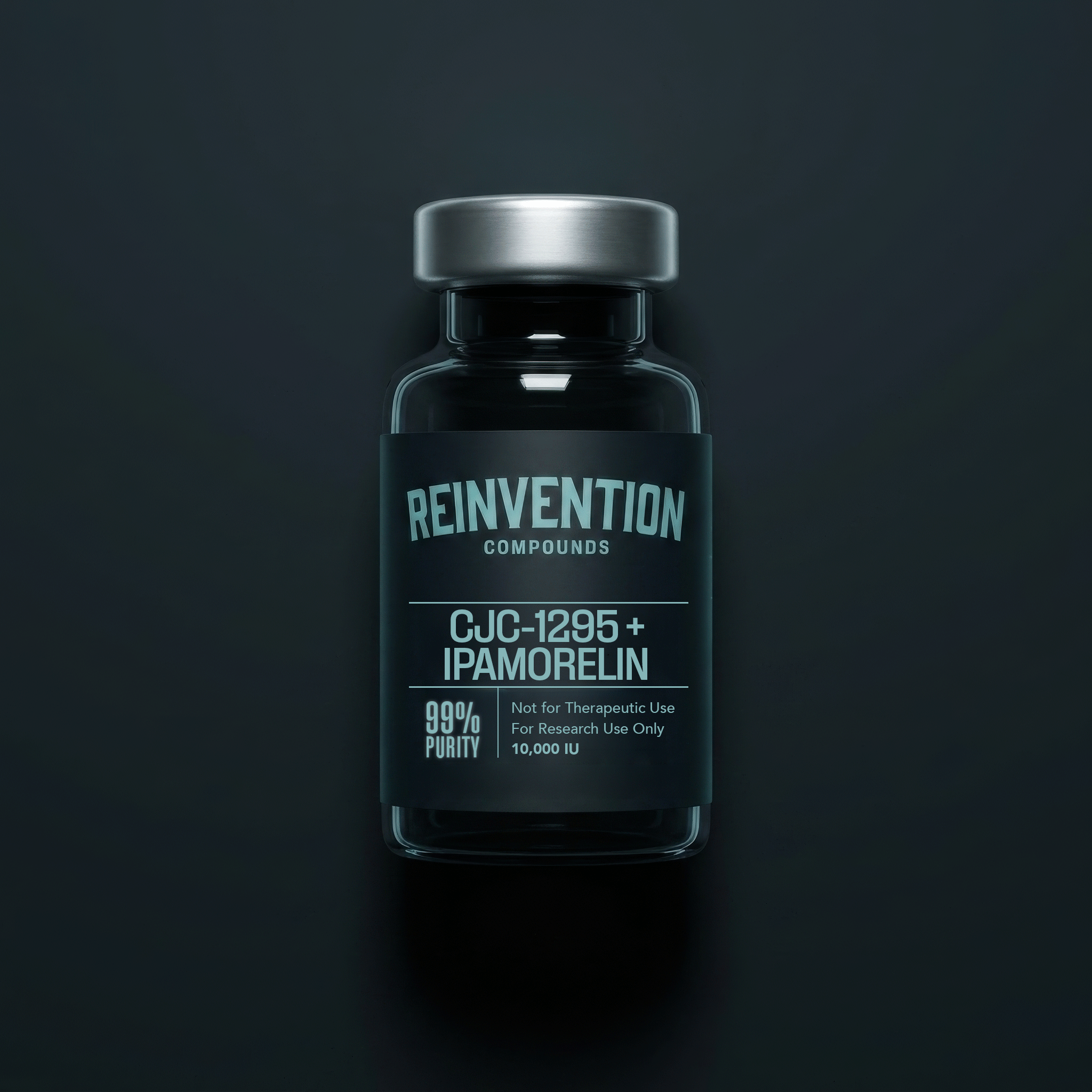
CJC-1295 (no DAC) + Ipamorelin 1:1 – 10mg

Original price was: $64.99.Current price is: $55.24.

TB-500 – 5mg

Original price was: $56.99.Current price is: $48.44.

Research Bacteriostatic Water

Price range: $10.99 through $24.99

GLP-2-TR

Price range: $127.49 through $144.49

BPC-157 – 10mg

Original price was: $69.99.Current price is: $59.49.

IGF-1 LR3 Description

IGF-1 LR3 (Long Arginine 3-Insulin-like Growth Factor-1) is an 83-amino acid synthetic analog of human insulin-like growth factor-1 (IGF-1). It is structurally modified from native IGF-1 in two ways: an arginine substitution replacing the glutamic acid at the third position, and a 13-amino acid extension added to the N-terminus. These modifications dramatically reduce its binding affinity for IGF-binding proteins (IGFBPs), the carrier proteins that normally sequester the majority of circulating IGF-1 and limit its receptor activity.

Because IGF-1 LR3 largely evades IGFBP regulation, it remains biologically active far longer than native IGF-1 — with a researched half-life of approximately 20–30 hours compared to roughly 12–15 hours for unmodified IGF-1 — and is reported to be approximately three times more potent in experimental models. It acts primarily as an agonist at the IGF-1 receptor (IGF-1R), with a lower secondary affinity for the insulin receptor.

Due to its sustained receptor activity and resistance to binding-protein sequestration, IGF-1 LR3 has been widely studied as a research tool for investigating growth factor signaling, cellular proliferation, and skeletal muscle biology. Its prolonged action makes it a stable, high-fidelity compound for in vitro and preclinical study of IGF-1R-mediated pathways without the rapid clearance that limits native IGF-1.

Peptide Information

Property Value
Amino Acid Sequence MFPAMPLSSL FVNGPRTLCG AELVDALQFV CGDRGFYFNK PTGYGSSSRR APQTGIVDEC CFRSCDLRRL EMYCAPLKPA KSA
Molecular Formula C400H625N111O115S9
Molecular Weight 9117.5 g/mol
CAS Number 946870-92-4
PubChem CID 168009904
Synonyms Long R3-IGF-1, LR3-IGF-1, Insulin-like Growth Factor-1 Long R3, IGF-1 LR3

Lyophilized Peptides:

These peptides are freeze-dried, a process that not only extends shelf life but also preserves the purity and integrity of the peptides during storage. We do not use any fillers in this process.

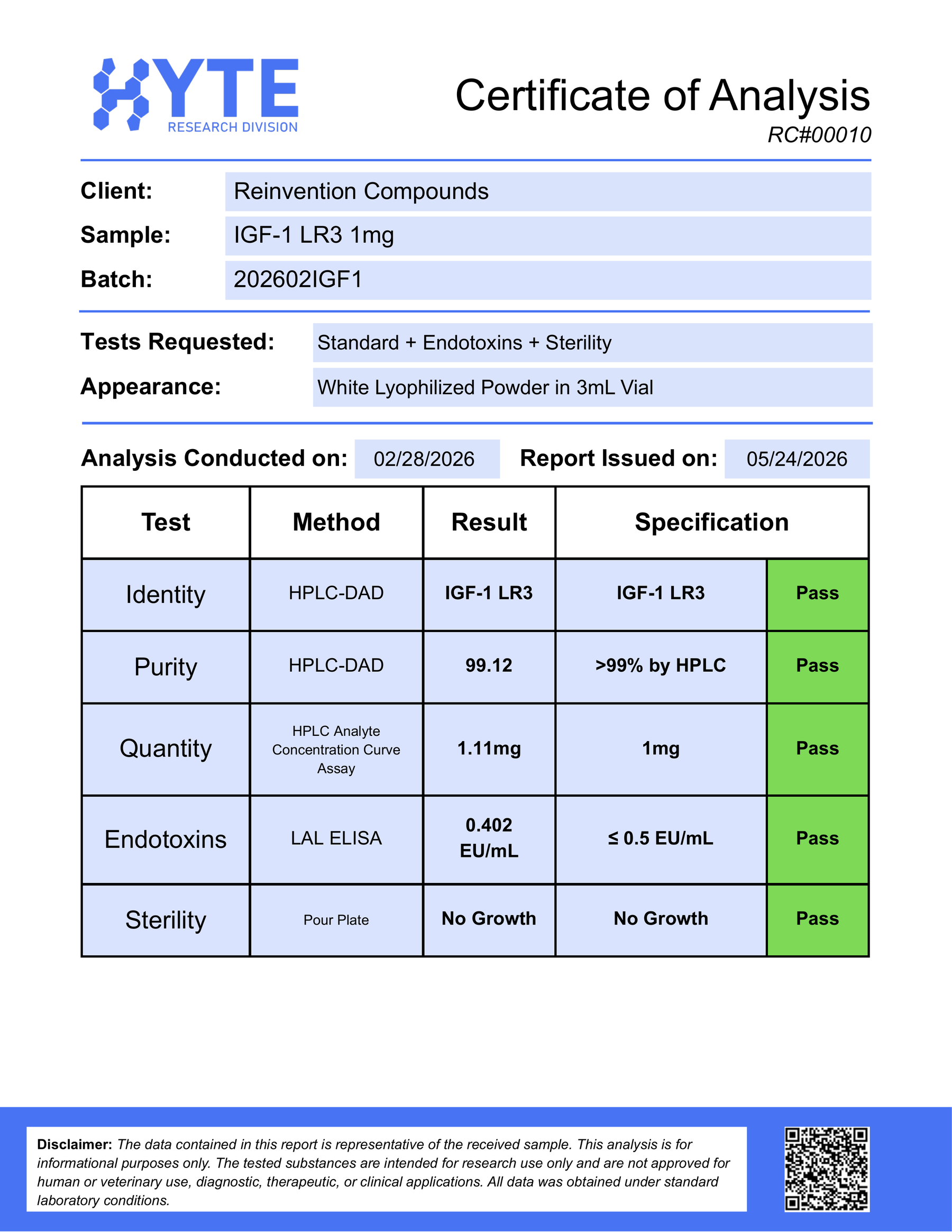
Sealed Vial: 1mg of Lyophilized Powder in 3ml Vial

CAS No.: 946870-92-4

Other Names: Long R3-IGF-1, LR3-IGF-1, Insulin-like Growth Factor-1 Long Arginine 3

This Product is Not For Human Consumption and is for Laboratory Use Only. Please Read our Terms and Conditions.

Disclaimer: For Research Purposes Only This content is provided strictly for research purposes and does not constitute an endorsement or recommendation for the non-laboratory application or improper handling of peptides designed for research. The information, including discussions about specific peptides and their researched benefits, is presented for informational purposes only and must not be construed as health, clinical, or legal guidance, nor an encouragement for non-research use. Peptides described here are solely for use in structured scientific study by authorized individuals. We advise consulting with research experts, medical practitioners, or legal counsel prior to any decisions about obtaining or utilizing these peptides. The expectation of responsible, ethical utilization of this information for legitimate investigative and scholarly objectives is paramount. This notice is dynamic and governs all provided content on research peptides.

IGF-1 LR3 Research

The following sections explore the applications and mechanisms of IGF-1 LR3 across multiple research domains. Current scientific investigations have focused on its role as a sustained-action agonist of the IGF-1 receptor, with particular interest in skeletal muscle physiology, tissue repair signaling, and metabolic pathways.

Because the LR3 modification produces prolonged, IGFBP-independent receptor activation, the compound has become a widely used tool in preclinical models of muscle growth, regeneration, and age-related muscle decline. This overview synthesizes key findings on its receptor mechanism, effects on satellite cells and muscle protein synthesis, role in muscle-wasting research, and metabolic signaling.

Receptor Mechanism and Signaling Pathways

IGF-1 LR3 binds to the IGF-1 receptor (IGF-1R), a transmembrane tyrosine kinase belonging to the insulin receptor superfamily. Upon binding, receptor autophosphorylation triggers two principal intracellular cascades: the PI3K/Akt/mTOR pathway, which governs protein synthesis and cell survival, and the Ras/MAPK/ERK pathway, which drives cellular proliferation and differentiation.

Research has characterized IGF-1 LR3’s binding kinetics at IGF-1R as comparable to or slightly greater than native IGF-1. The compound’s defining research advantage is its resistance to IGF-binding proteins, which under normal conditions sequester the large majority of circulating IGF-1 and prevent receptor engagement. By largely evading this regulatory system, IGF-1 LR3 enables sustained IGF-1R activation in experimental settings, making it a high-fidelity tool for receptor signaling studies.

Skeletal Muscle Hypertrophy and Satellite Cell Activation

The most extensively investigated domain of IGF-1 LR3 research is skeletal muscle biology. Studies in cell culture and animal models have examined its capacity to activate satellite cells — the quiescent muscle stem cells responsible for muscle repair and growth — prompting them to exit dormancy, proliferate, and differentiate into myoblasts that fuse with existing fibers or form new ones.

Research indicates that IGF-1 signaling activates satellite cells through both the PI3K/Akt and MAPK pathways, increasing expression of myogenic regulatory factors such as MyoD that orchestrate the differentiation program. Foundational work demonstrated that localized IGF-1 overexpression in animal hindlimb muscle produced significant increases in muscle mass, with satellite cell contribution shown to be essential to the hypertrophic response. A comprehensive 2020 review confirmed that IGF-1 stimulates protein synthesis through PI3K/Akt/mTOR signaling while simultaneously suppressing protein degradation via FoxO inhibition — the LR3 modification rendering this activity more sustained in research models.

Notably, IGF-1 LR3 has been studied for driving both hypertrophy (increased fiber size) and hyperplasia (increased fiber number), with the proliferative component representing a distinct anabolic mechanism in preclinical work.

Applications in Muscle-Wasting and Sarcopenia Research

IGF-1 LR3 has been investigated as a research candidate in models of muscle wasting, trauma recovery, and age-related sarcopenia. Studies have explored its ability to counteract muscle atrophy by simultaneously promoting regeneration and limiting protein breakdown, with some research describing myostatin-inhibitory activity in experimental settings.

Preclinical models have documented measurable structural changes — increases in myofiber cross-sectional area, satellite cell counts, and myonuclear accretion — though research also notes that these structural gains do not always translate proportionally into functional strength improvements, as strength additionally depends on neural activation, fiber-type distribution, and extracellular matrix remodeling. This distinction is an active consideration in ongoing investigation.

Metabolic Signaling

Beyond muscle, IGF-1 LR3’s secondary affinity for the insulin receptor has prompted research interest in its metabolic effects. Studies indicate it can influence glucose uptake into muscle, nerve, and liver cells through combined IGF-1R and insulin receptor engagement, with associated effects on nutrient partitioning and fat metabolism observed in experimental models. These metabolic signaling pathways remain an area of continued preclinical study.

Research Considerations

Research literature notes that sustained, IGFBP-independent IGF-1R activation carries theoretical considerations relevant to experimental design, including receptor desensitization with prolonged exposure and the proliferative nature of IGF-1R signaling. These factors are routinely addressed in study protocols through controlled exposure windows.

{{ reviewsTotal }}{{ options.labels.singularReviewCountLabel }}
{{ reviewsTotal }}{{ options.labels.pluralReviewCountLabel }}
{{ options.labels.newReviewButton }}
{{ userData.canReview.message }}

Related Products

DSIP – 10mg

Original price was: $49.99.Current price is: $42.49.

KPV – 10mg

Original price was: $54.99.Current price is: $46.74.

KLOW Blend – 80mg (BPC-157 + TB-500 + GHK-Cu + KPV)

Original price was: $119.99.Current price is: $101.99.

Oxytocin Acetate – 5mg

Original price was: $39.99.Current price is: $33.99.

Join Waitlist We will inform you when the product arrives in stock. Please leave your valid email address below.