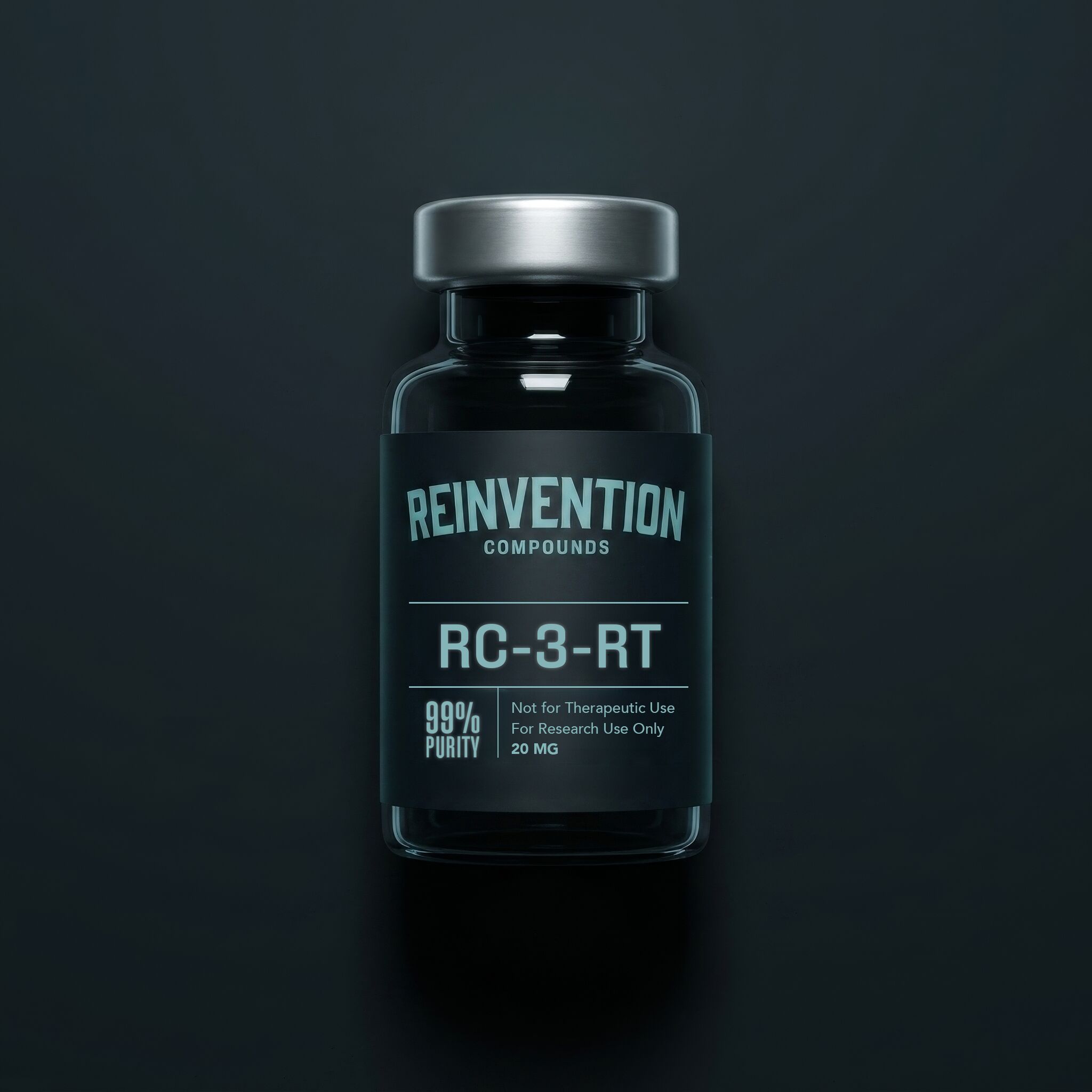
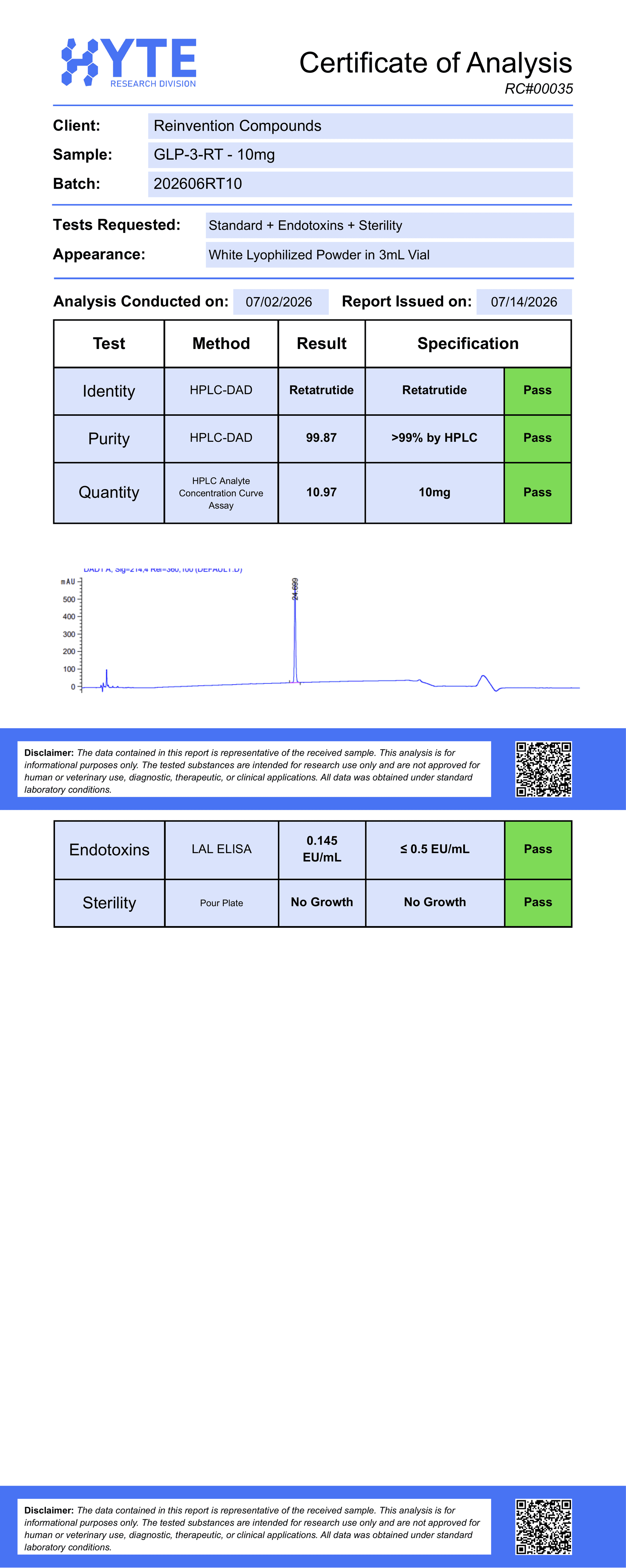
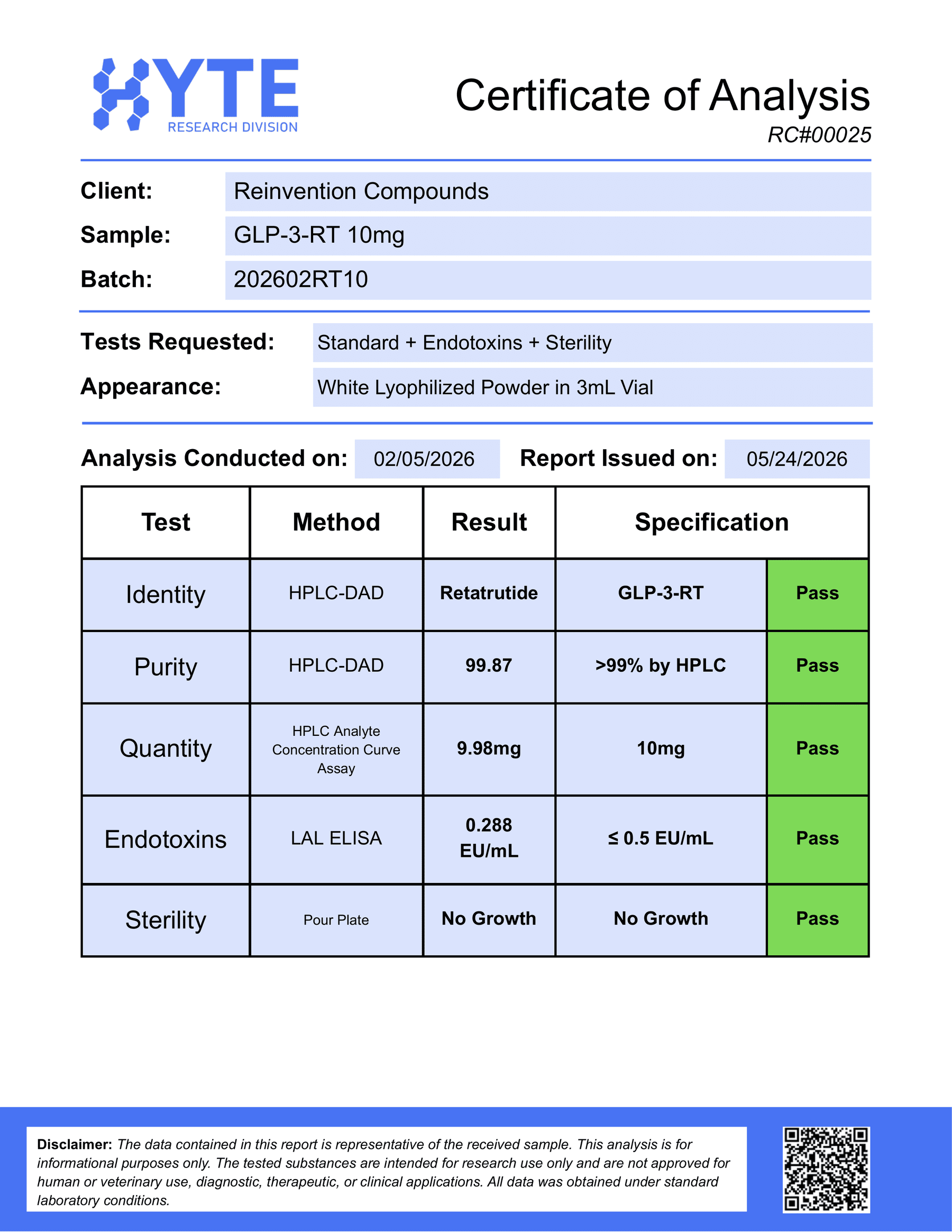
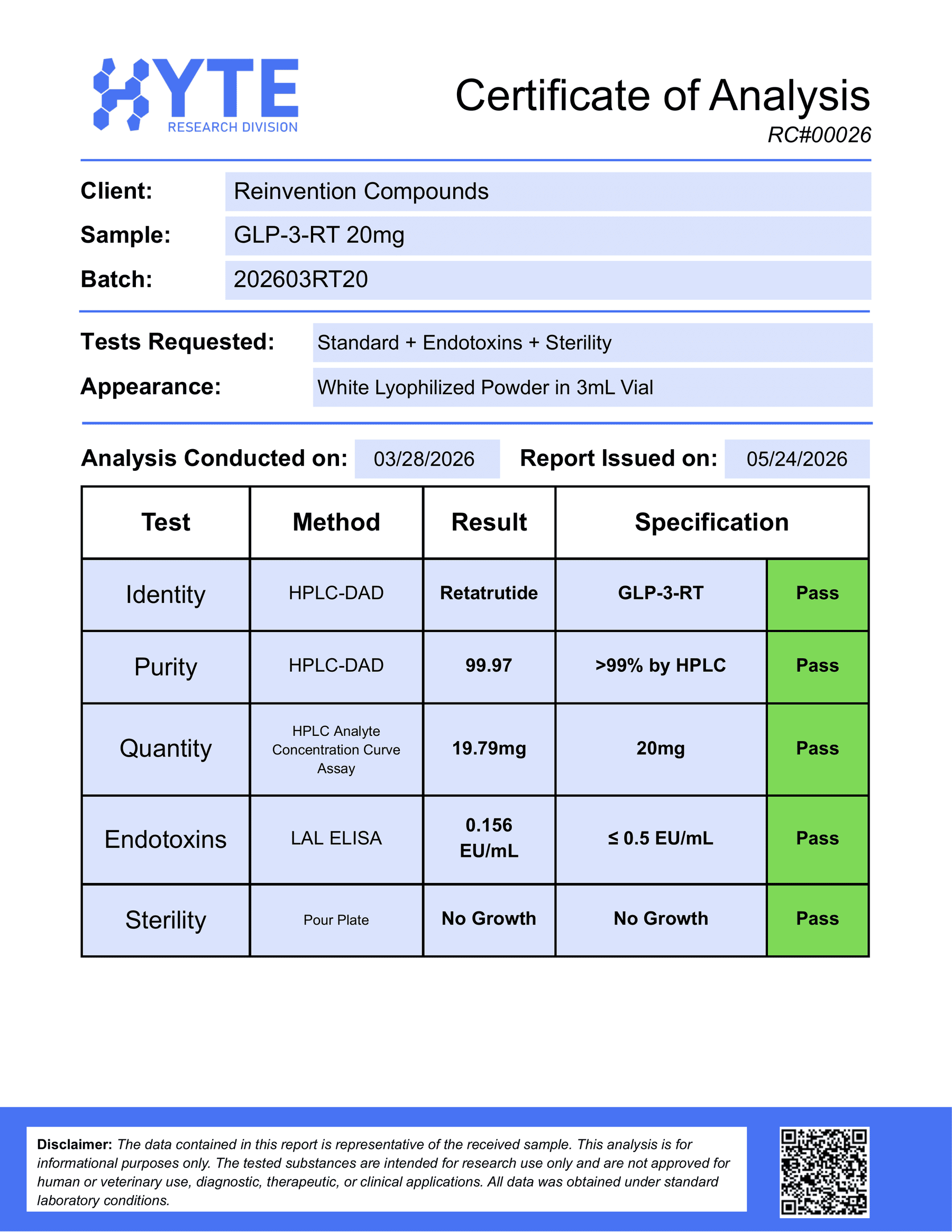
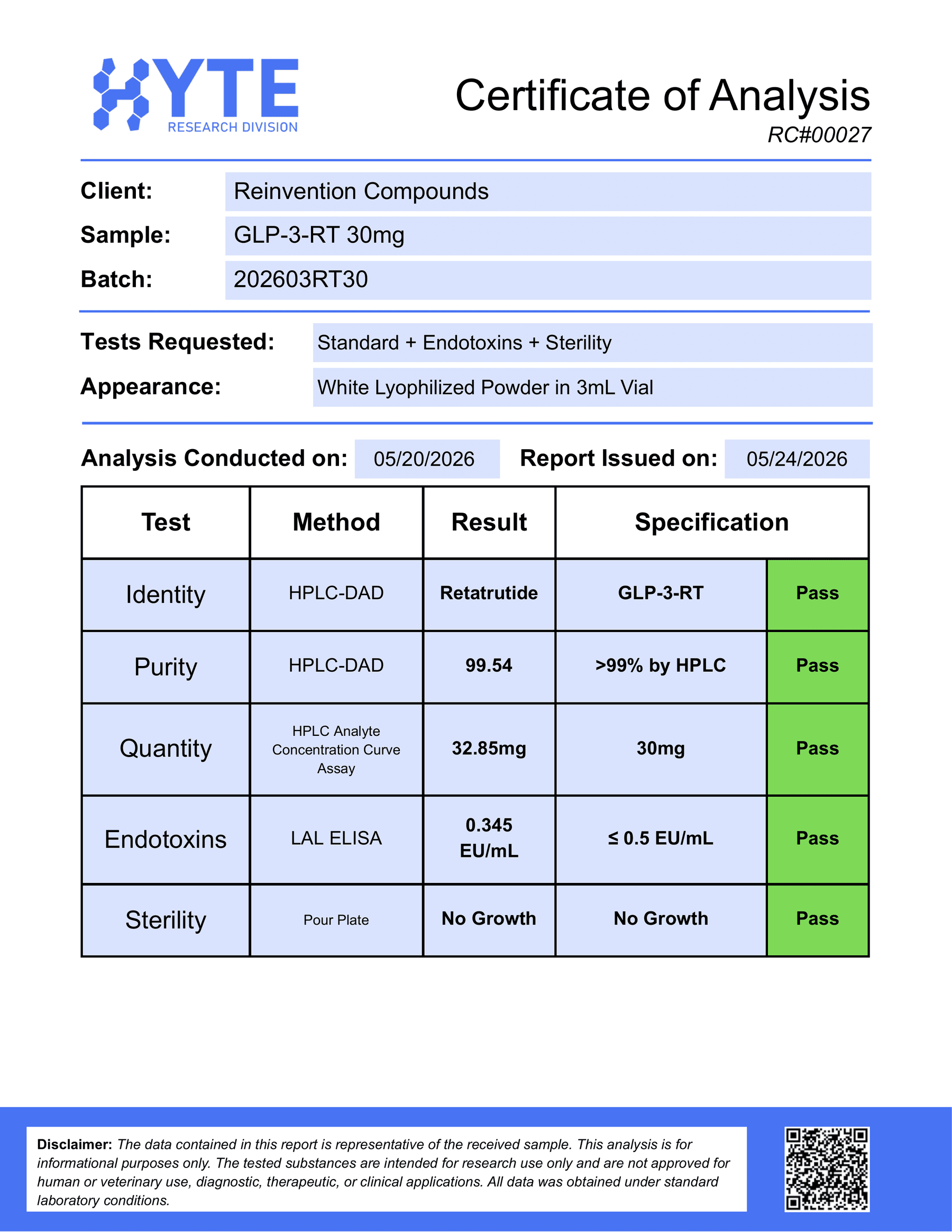
GLP-3-RT Description
GLP-3-RT (Retatrutide) is a synthetic 39-amino-acid peptide engineered as a first-in-class triple incretin receptor agonist, simultaneously activating the glucose-dependent insulinotropic polypeptide (GIP) receptor, the glucagon-like peptide-1 (GLP-1) receptor, and the glucagon (GCGR) receptor. Developed by Eli Lilly, it is built on a GIP-based peptide backbone with engineered non-coded residues — an α-aminoisobutyric acid (Aib) substitution, an α-methyl-leucine residue, and a C20 fatty diacid chain conjugated to a lysine via a linker for albumin binding and extended half-life.
GLP-3-RT works by engaging three metabolic G-protein-coupled receptors within a single molecule. Through the GLP-1 receptor it enhances glucose-dependent insulin secretion and reduces appetite; through the GIP receptor it further augments insulin response and adipose insulin sensitivity; and, distinctively, through the glucagon receptor it increases energy expenditure and promotes fat oxidation and hepatic lipid handling — the glucagon arm being the feature that separates triple agonism from dual GIP/GLP-1 agonism. Its C20 fatty-diacid modification supports a circulating half-life of roughly 6 days and once-weekly research dosing.
Retatrutide is among the most actively researched next-generation incretin agonists, with a rapidly growing clinical and structural literature spanning body weight, glycemic control, hepatic-fat models, and the structural basis of triple-receptor agonism. It is studied here strictly as a research peptide.
Peptide Information
| Research Compound | Retatrutide (triple GIP/GLP-1/glucagon receptor agonist; GIP-based 39-aa analog) |
| Modifications | Aib substitution; α-methyl-leucine residue; C20 fatty diacid at lysine (linker); C-terminal amidation |
| Molecular Formula | C228H350N48O66 |
| Molecular Weight | 4894.6 g/mol |
| CAS Number | 2381089-83-2 |
| PubChem CID | 171390338 |
| Synonyms | Retatrutide, LY3437943, GIP/GLP-1/GCGR triple agonist |
| Supplied As | Sodium Salt |
Lyophilized Peptides:
These peptides are freeze-dried, a process that not only extends shelf life but also preserves the purity and integrity of the peptides during storage. We do not use any fillers in this process. GLP-3-RT should be stored refrigerated and protected from light; keep reconstituted solution refrigerated.
Sealed Vial: 10mg of Lyophilized Powder in 3ml Vial
Sealed Vial: 20mg of Lyophilized Powder in 3ml Vial
Sealed Vial: 30mg of Lyophilized Powder in 3ml Vial
CAS No.: 2381089-83-2
Other Names: Retatrutide, LY3437943, GIP/GLP-1/glucagon triple agonist (Acetate)
This Product is Not For Human Consumption and is for Laboratory Use Only. Please Read our Terms and Conditions.
Disclaimer: For Research Purposes Only
This content is provided strictly for research purposes and does not constitute an endorsement or recommendation for the non-laboratory application or improper handling of peptides designed for research. The information, including discussions about specific peptides and their researched benefits, is presented for informational purposes only and must not be construed as health, clinical, or legal guidance, nor an encouragement for non-research use. Peptides described here are solely for use in structured scientific study by authorized individuals. We advise consulting with research experts, medical practitioners, or legal counsel prior to any decisions about obtaining or utilizing these peptides. The expectation of responsible, ethical utilization of this information for legitimate investigative and scholarly objectives is paramount. This notice is dynamic and governs all provided content on research peptides.
GLP-3-RT Research
The following sections explore the diverse applications and mechanisms of GLP-3-RT (Retatrutide) across multiple research domains. As the first-in-class triple incretin receptor agonist, it has become one of the most closely studied next-generation metabolic peptides in current research.
This overview synthesizes key findings on its triple-receptor mechanism and research applications in body weight and glycemic control.
Triple Incretin Receptor Mechanism
Retatrutide’s defining feature is unimolecular agonism at GIPR, GLP-1R, and GCGR. Structural research using cryo-electron microscopy has characterized how its engineered sequence and fatty-acid modification enable simultaneous engagement of all three receptors, defining the structural basis for triple agonism and how the conserved N-terminal region and variable mid-region confer receptor-specific recognition1.
Body Weight Research
The pivotal Phase 2 obesity trial, a randomized double-blind placebo-controlled study, reported substantial dose-dependent body-weight reduction with once-weekly retatrutide over 48 weeks — among the largest weight-outcome magnitudes reported for an incretin-based agent and a key reference dataset establishing triple agonism as a distinct research direction2.
Glycemic Control Research
A parallel Phase 2 trial in type 2 diabetes evaluated retatrutide against placebo and an active comparator, reporting clinically meaningful glucose-lowering alongside body-weight reduction — characterizing the compound’s combined glycemic and weight pharmacology in a diabetic research population3.
Mechanistic and Translational Pharmacology
Beyond outcome trials, retatrutide has been studied as a pharmacological tool for dissecting the contribution of glucagon-receptor agonism to energy expenditure and hepatic lipid metabolism within a multi-receptor agonist, distinguishing it mechanistically from single- and dual-incretin agonists4.
Research Considerations
Across the clinical literature, the most commonly reported effects are gastrointestinal (nausea, vomiting, diarrhea, constipation), generally dose-dependent and associated with titration. The research literature notes that glucagon-receptor agonism can influence heart rate and metabolic parameters, and study designs routinely account for dose escalation and monitoring. These considerations are routinely accounted for within controlled study protocols.
References
- Sun, B., Chen, Q., Willard, F. S., et al. (2024). Structural insights into the triple agonism at GLP-1R, GIPR and GCGR manifested by retatrutide. Cell Discovery, 10, 79. https://doi.org/10.1038/s41421-024-00700-0
- Jastreboff, A. M., Kaplan, L. M., Frías, J. P., Wu, Q., Du, Y., Gurbuz, S., et al. (2023). Triple–hormone-receptor agonist retatrutide for obesity — a phase 2 trial. New England Journal of Medicine, 389(6), 514–526. https://doi.org/10.1056/NEJMoa2301972
- Rosenstock, J., Frias, J., Jastreboff, A. M., Du, Y., Lou, J., Gurbuz, S., et al. (2023). Retatrutide, a GIP, GLP-1 and glucagon receptor agonist, for people with type 2 diabetes: a randomised, double-blind, placebo and active-controlled, parallel-group, phase 2 trial conducted in the USA. The Lancet, 402(10401), 529–544. https://doi.org/10.1016/S0140-6736(23)01053-X
- Jastreboff, A. M., Kaplan, L. M., & Hartman, M. L. (2023). Triple–hormone-receptor agonist retatrutide for obesity (reply / mechanistic correspondence). New England Journal of Medicine, 389(17), 1629–1630. https://doi.org/10.1056/NEJMc2310645
